
-
Cart
No items added to cart
Subtotal {{ currencyFormat( getSubtotal() ) }}Continue -
Sign In/Register
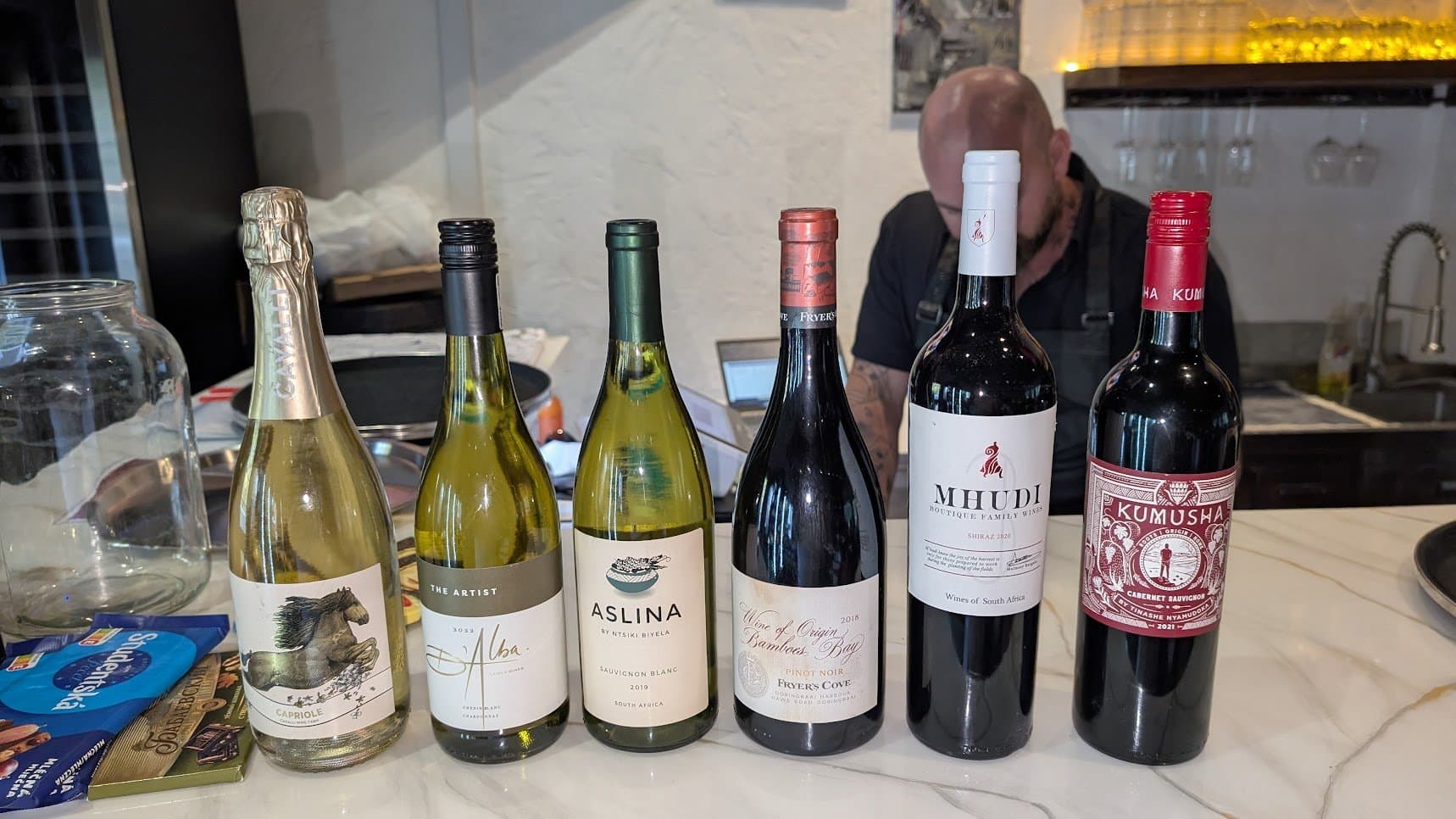
Wine Not in French Harbour has been running themed wine tastings for a while now, and if you caught the Around the World edition, you have a sense of what to expect: generous pours, a well-chosen lineup, and a room full of people who arrived as strangers and left comparing favorites. The African Safari edition follows the same format, but this time the story runs deeper. Every bottle in the lineup came from South Africa, and almost every producer has a story that goes well beyond the wine itself.
Thirteen of us showed up on a Saturday evening: two couples, a group of eight, and one solo diner who looked very comfortable by the end of the night. The price is $35 per person and it includes six wines and salami and cheese skewers. If you want to eat properly alongside it, order something extra. More on that below.
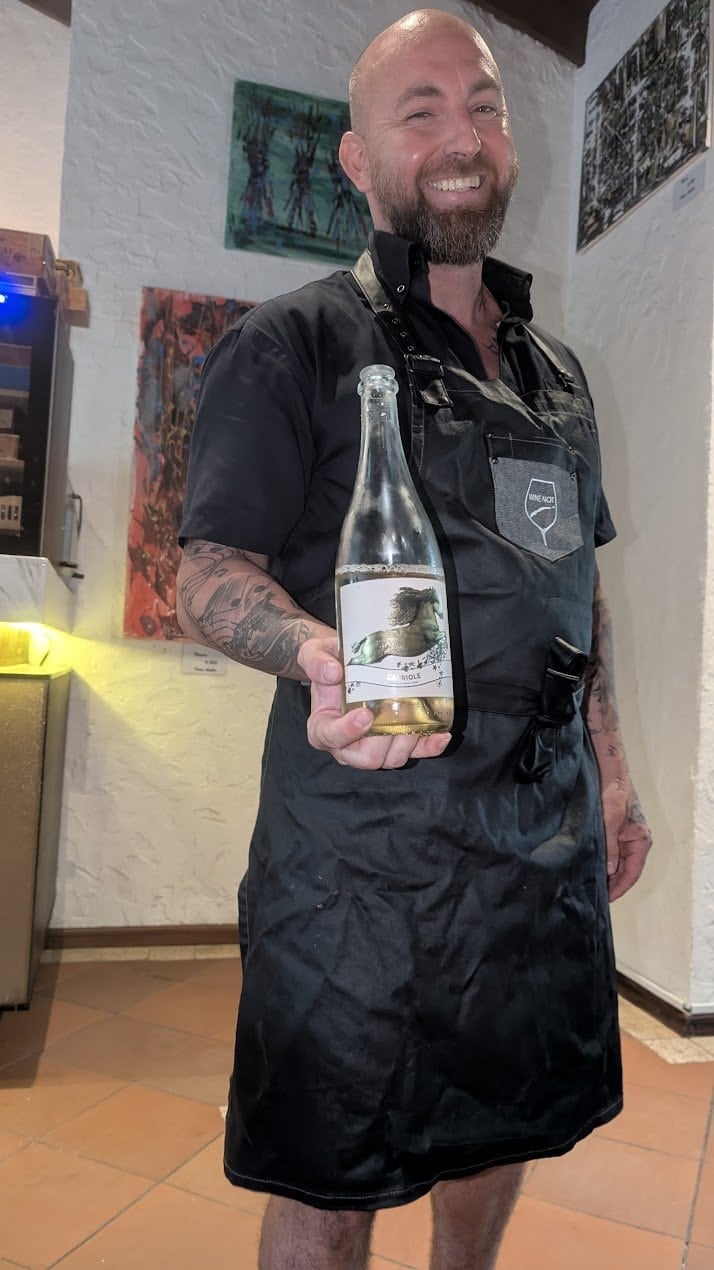
Martin runs the tastings. He introduces himself as a wine enthusiast rather than a sommelier, but the distinction feels modest. He knows the history of every producer on the table, where they farm, why the wine matters, and he tells those stories in a way that makes each pour mean something. When someone at the table asks a question, he has the answer. That combination of knowledge and approachability is what separates a good wine tasting from a great one.
Wine 1: Cavalli Capriole MCC — The Estate That Loves Horses as Much as Wine
Cavalli Estate was founded in 2013 by the late Jerome Smith, who had a passion for the Cape fauna and flora. His daughter, Lauren Smith, a qualified architect and experienced equestrian, continues his passion on the estate, which in a short period became well-known as a sophisticated lifestyle experience. The name Cavalli is Italian for horses, and the estate takes that identity seriously across 100 hectares in the Helderberg region of Stellenbosch, with an indoor equestrian arena, an art gallery, and a restaurant sharing the property with the winery.
The Capriole is their MCC, Methode Cap Classique, which is the South African term for traditional-method sparkling wine made the same way as Champagne. It is a vibrant, crisp expression made with 100% Chardonnay, with green apple, white pear, and quince in the fruit profile, and flavors of biscuit and brioche bringing complexity to the palate. The grapes are hand-picked and sorted in the early morning, fermented in stainless steel, then bottled under crown cap for secondary fermentation, which produces the fine mousse.
As an opener for a six-wine tasting, it works perfectly. Light, clean, and just lively enough to reset the palate before the next pour.
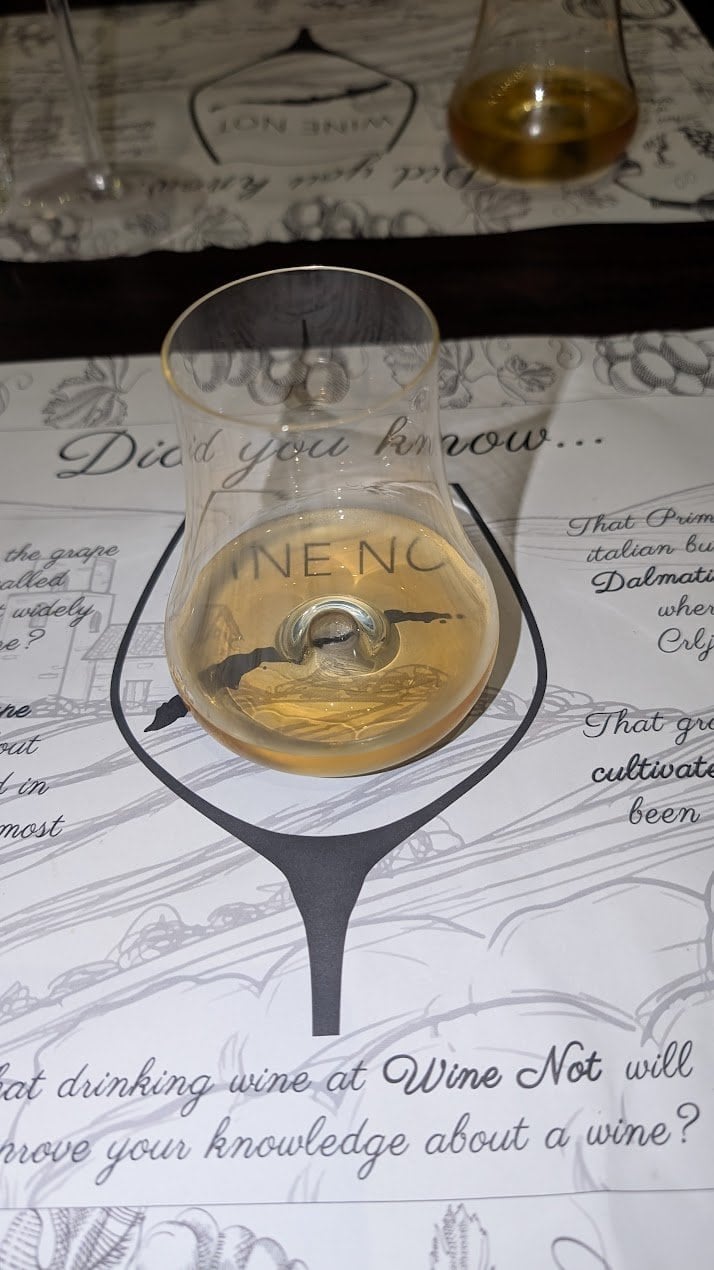
Wine 2: D’Alba Family Wines “The Artist” 2022 — Chenin Blanc Meets Chardonnay
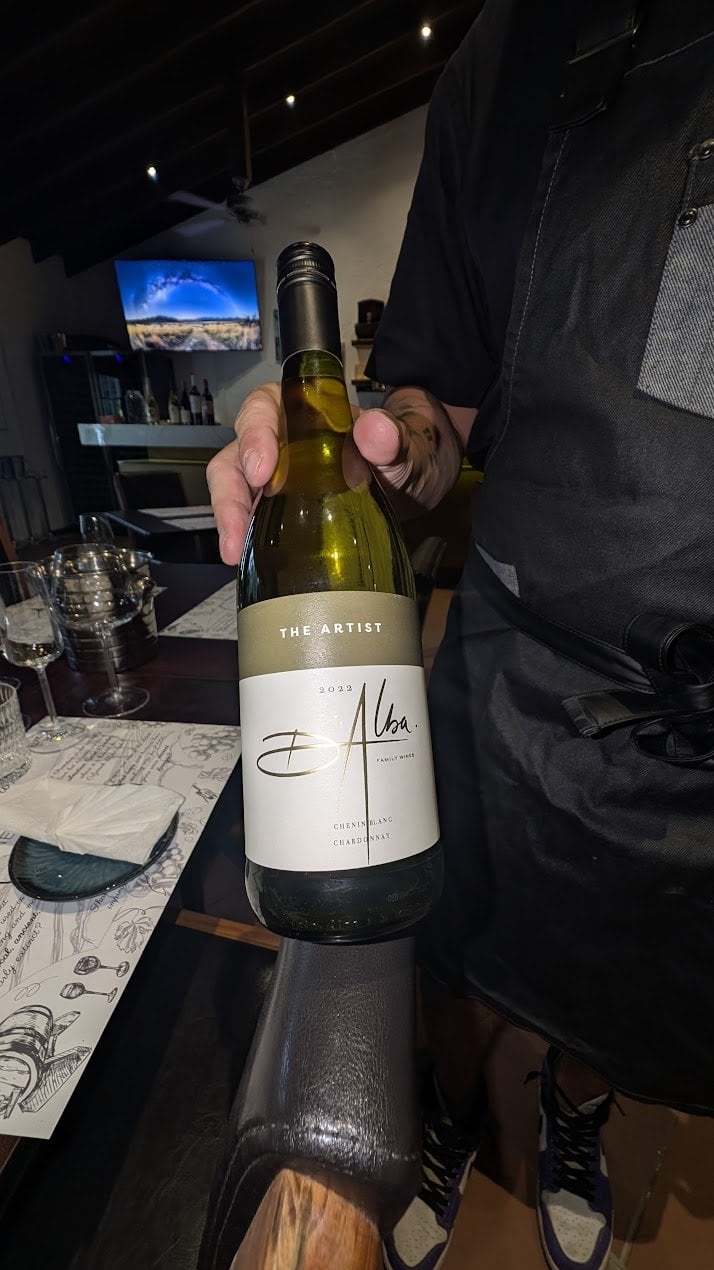
The D’Alba “The Artist” is a white blend of Chenin Blanc and Chardonnay, two grapes that represent two very different South African traditions. Chenin Blanc, known locally as Steen, has been planted in South Africa for over 300 years and now covers more acreage there than in its native Loire Valley in France. Chardonnay brings body and a rounder texture to the blend. Together they produce something more interesting than either grape alone.
This bottle was well-balanced and approachable: fruit-forward without being sweet, structured enough to hold up to food, and easy enough to enjoy without needing to analyze it. It works well at the front of a tasting because it does not demand too much attention, but it rewards people who pay it some.
Wine 3: Aslina Sauvignon Blanc 2019 by Ntsiki Biyela — A Bottle That Changed an Industry
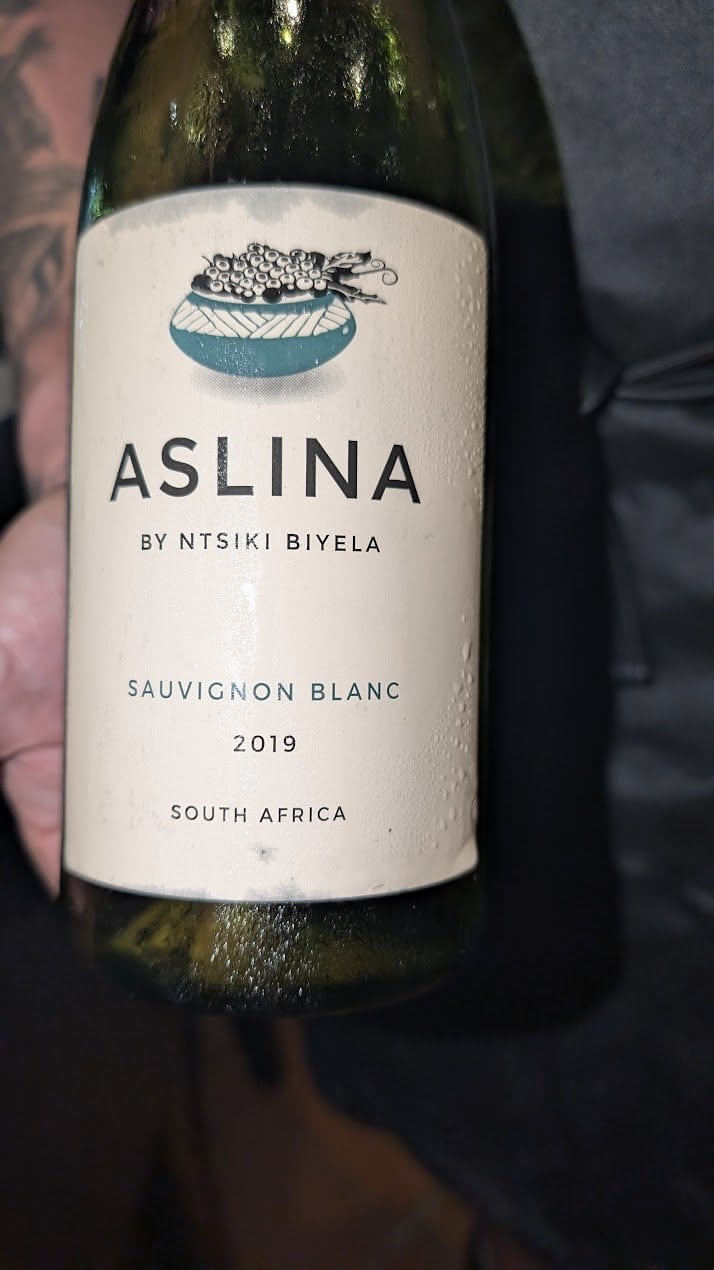
This is the wine in the lineup with the most remarkable backstory, and Martin told it well.
Ntsiki Biyela grew up in the rural village of Mahlabathini in South Africa. She was a domestic worker before becoming the country’s first Black female winemaker. It was not a passion for grapes that drove her. After being recruited by her high school, she applied for a winemaking scholarship at Stellenbosch University. She had never tasted wine before. The decision was not about wine. It was about getting an education and changing her life, and it happened to be wine that opened that door.
After graduating, she was hired as winemaker for Stellekaya Wines in 2004, making her the first Black female winemaker in South Africa. Her first red wine won a gold medal at the Michelangelo awards. In 2017 she launched Aslina Wines, a self-funded wine business named in honor of her late grandmother, whose strength and love continue to inspire her work. Her philosophy: keep it authentic, and do not fiddle too much with what nature gives.
The 2019 Sauvignon Blanc had six years to develop before it reached our table. At that age, South African Sauvignon Blanc takes on more depth and roundness than the sharp, citrus-forward style most people expect from a younger vintage. It paired particularly well with the camembert.
Pro Tip: The Aslina Chardonnay and Cabernet Sauvignon have both earned international recognition. If you see any Aslina label on a wine list, it is worth ordering.
Wine 4: Fryer’s Cove Bamboes Bay Pinot Noir 2018 — Forged of the Earth, Tempered by the Sea
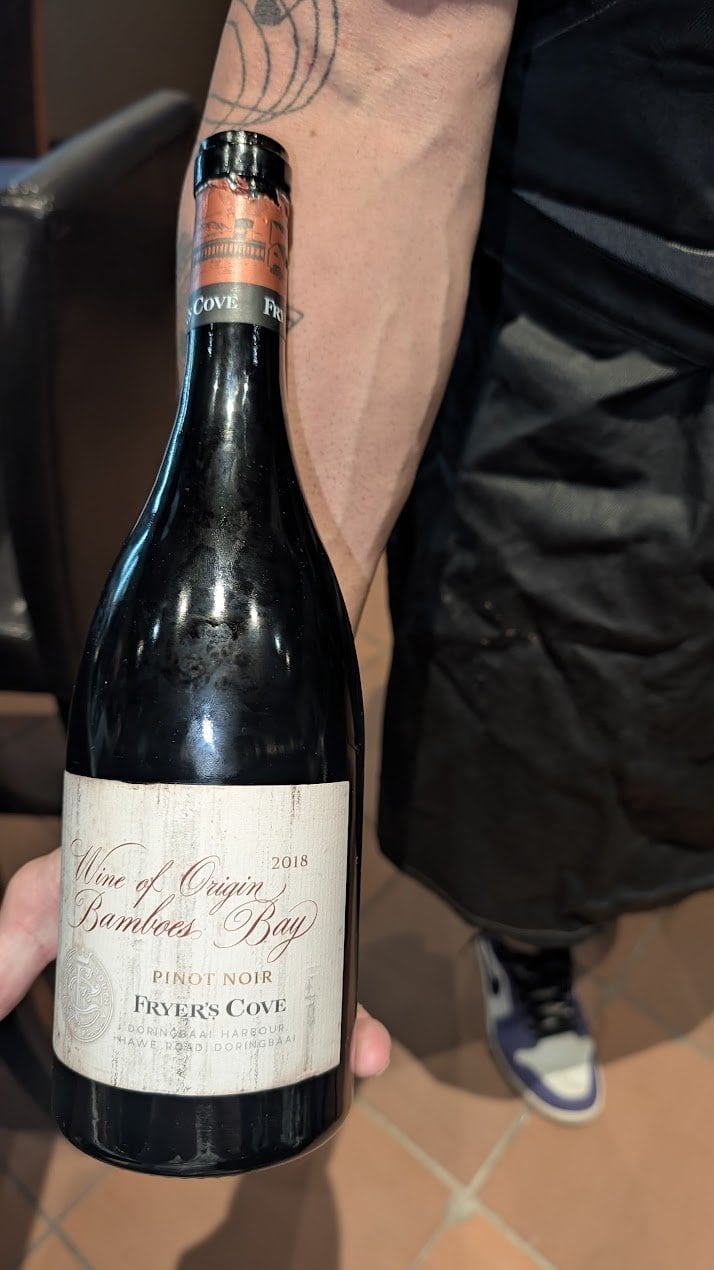
That slogan is on every bottle of Fryer’s Cove wine, and the wine earns it.
Fryer’s Cove is the only vineyard within the Bamboes Bay ward, which is also the smallest wine ward in South Africa. The vines dot the hillside 500 meters from where the cold ocean throws its breakers against a rocky shore. Getting water to those vines required serious commitment. The founder negotiated with surrounding farmers to pipe fresh water from the Olifants River 29 kilometers away in order to establish the vines. The winery itself was converted from a former fish processing factory and uses seawater cooling systems.
The grapes ripen slowly due to moderate temperatures and cool Atlantic breezes. Because of the style, character, and quality of this Pinot Noir, it is held for at least two years in bottle before release and can continue developing for a further five to eight years.
The 2018 had been in bottle for several years before reaching Roatan, and it showed. There was a mineral, slightly saline quality that you simply do not find in Pinot Noir from inland regions. It tasted like somewhere specific, which is what the best wines do.
Wine 5: Mhudi Boutique Family Wines Shiraz 2020 — The Farm They Were Told Not to Buy
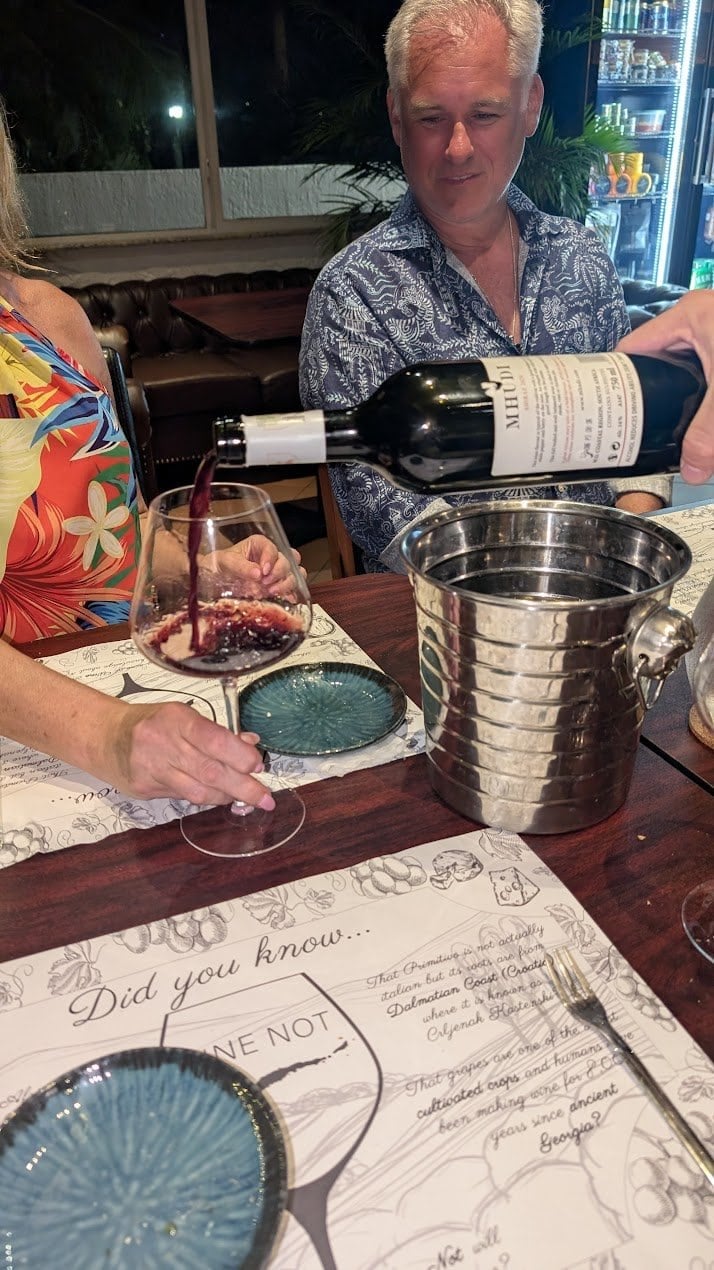
Mhudi is the story of Malmsey and her husband Diale Rangaka, who had the courage to bet on themselves. They took out bank loans, cashed in their pensions, and in 2003 bought a wine farm. Neither had any experience in winemaking. Their farm workers left because they did not want to work for a Black employer. The Rangaka family were the first Black family to acquire a wine farm in South Africa.
Their next-door neighbors, the Griers from Villiera Wines, welcomed them and passed on winemaking knowledge as the Rangakas worked to put theoretical learning into practice. The name Mhudi comes from the Setswana word Mohudi, meaning harvester, and references the first novel written in English by a Black South African. Malmsey Rangaka’s signature is on the label of every bottle.
The Shiraz is a full, warm red. South African Shiraz tends toward the ripe, spice-forward style rather than the leaner, peppery style of the northern Rhone. At this point in the tasting, after two whites and a Pinot Noir, the shift to a bigger red was exactly right. The wine felt like it meant something, because the story behind it does.
Wine 6: Kumusha Cabernet Sauvignon 2021 by Tinashe Nyamudoka — From Polishing Cutlery to Owning a Label
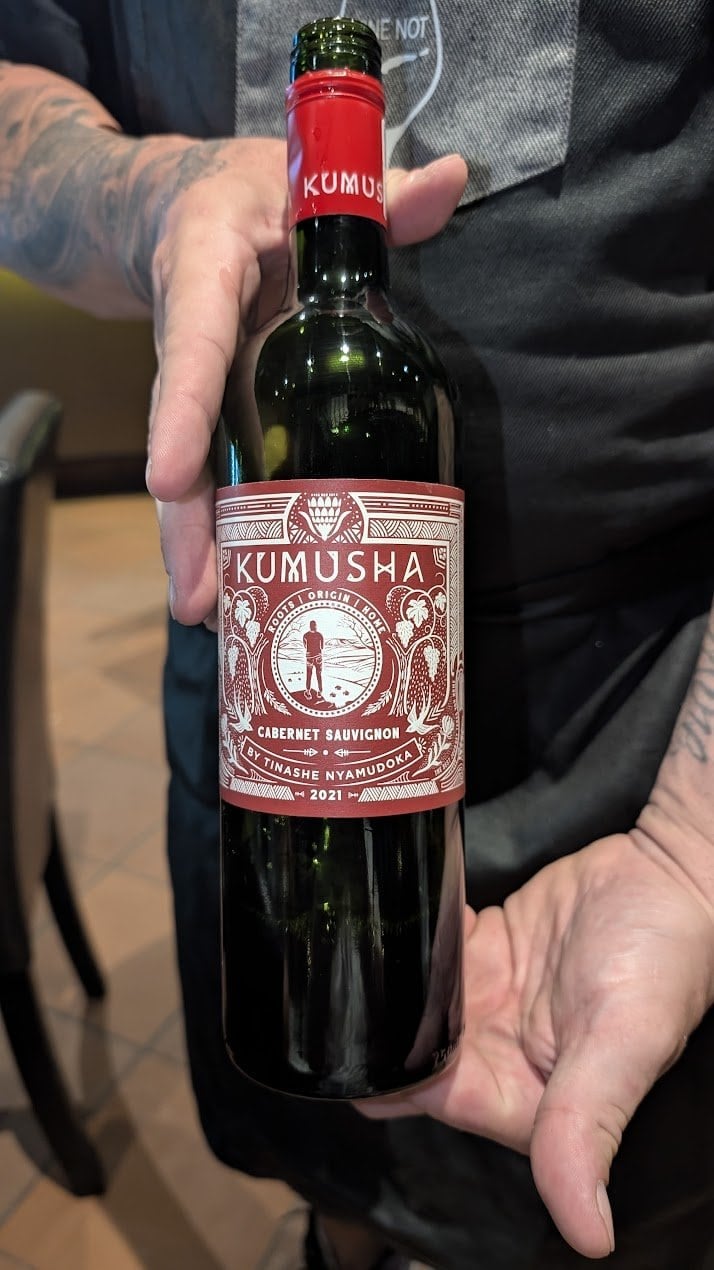
Tinashe Nyamudoka came to South Africa in 2008 without any prior knowledge or background in wine. His introduction came through the hospitality industry when he found work at The Roundhouse Restaurant in Camps Bay as a commis waiter. The restaurant ran a hospitality training program, and Nyamudoka came in with no preconceptions and absorbed everything.
He went on to become a wine steward, then a sommelier, then head sommelier at The Test Kitchen in Cape Town, considered one of Africa’s finest restaurants before it closed during the pandemic. Kumusha means “your home” or “your roots” in the Shona language of Zimbabwe. The wines are developed using minimal intervention and natural fermentation, letting the wine speak for its origins. Kumusha now produces around 200,000 bottles a year and ships to markets including the United States, Kenya, Zimbabwe, the Netherlands, and Nigeria.
The Cabernet Sauvignon is full-bodied with a label design unlike anything else on a South African wine shelf. It was the right bottle to close the official lineup, and it landed well after everything that came before it.
The Grappa
Strong. Icy cold. One per person. Small sips are strongly recommended. It marked a clean break between the official tasting and the rest of the evening.
After the Grappa: A Martin Recommendation
After the grappa, we asked Martin for a Syrah recommendation to keep the evening going. He did not hesitate: the Teperberg Vision Shiraz 2023 from Israel.
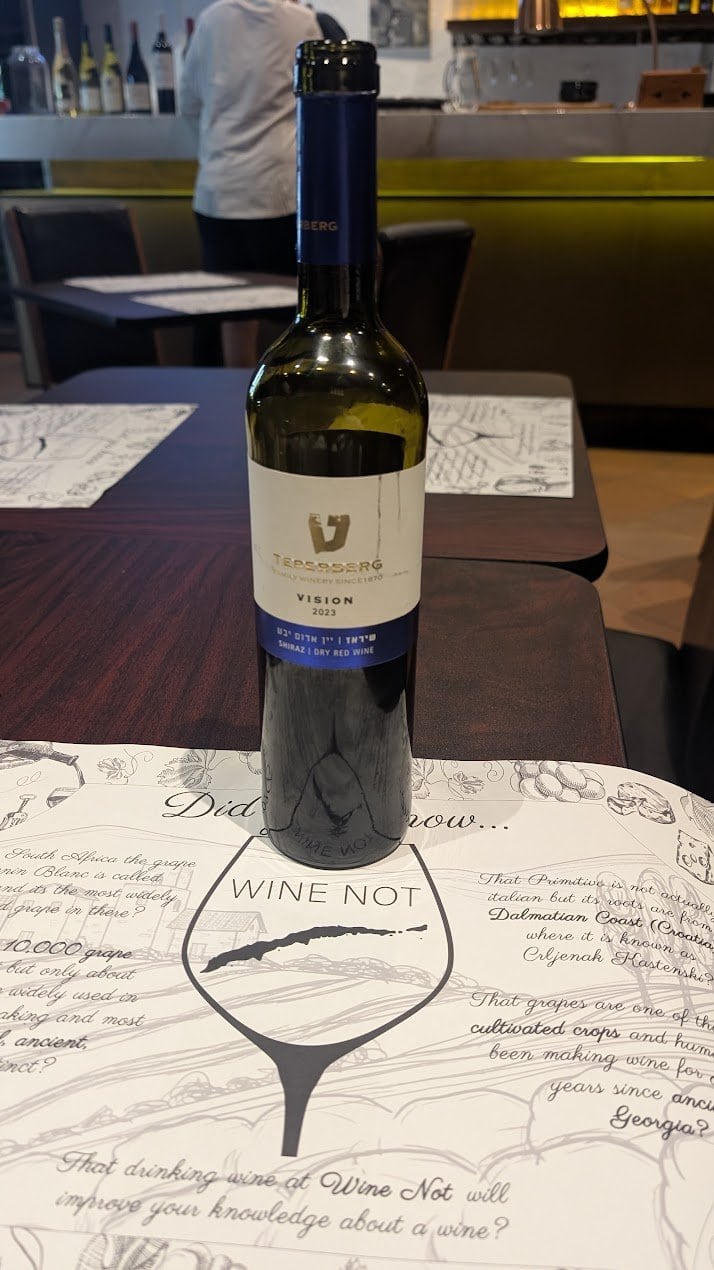
Teperberg was established in 1870 in the Old City of Jerusalem and has remained under family ownership ever since, now operated by Moti Teperberg, who has spearheaded a sustained period of growth, innovation, and dedication to quality. In 2015, Teperberg launched the Vision series as part of a collection highlighting five generations of the family. The Vision Shiraz spends five months in French and American oak and sits at the accessible end of the range, but accessible does not mean thin.
After six South African wines and a grappa, this was a different direction entirely. Mediterranean in style, soft and round, with enough body to hold up at that point in the evening. It was one of Martin’s personal favorites, and it showed. Nobody ordered less than one glass.
The Food
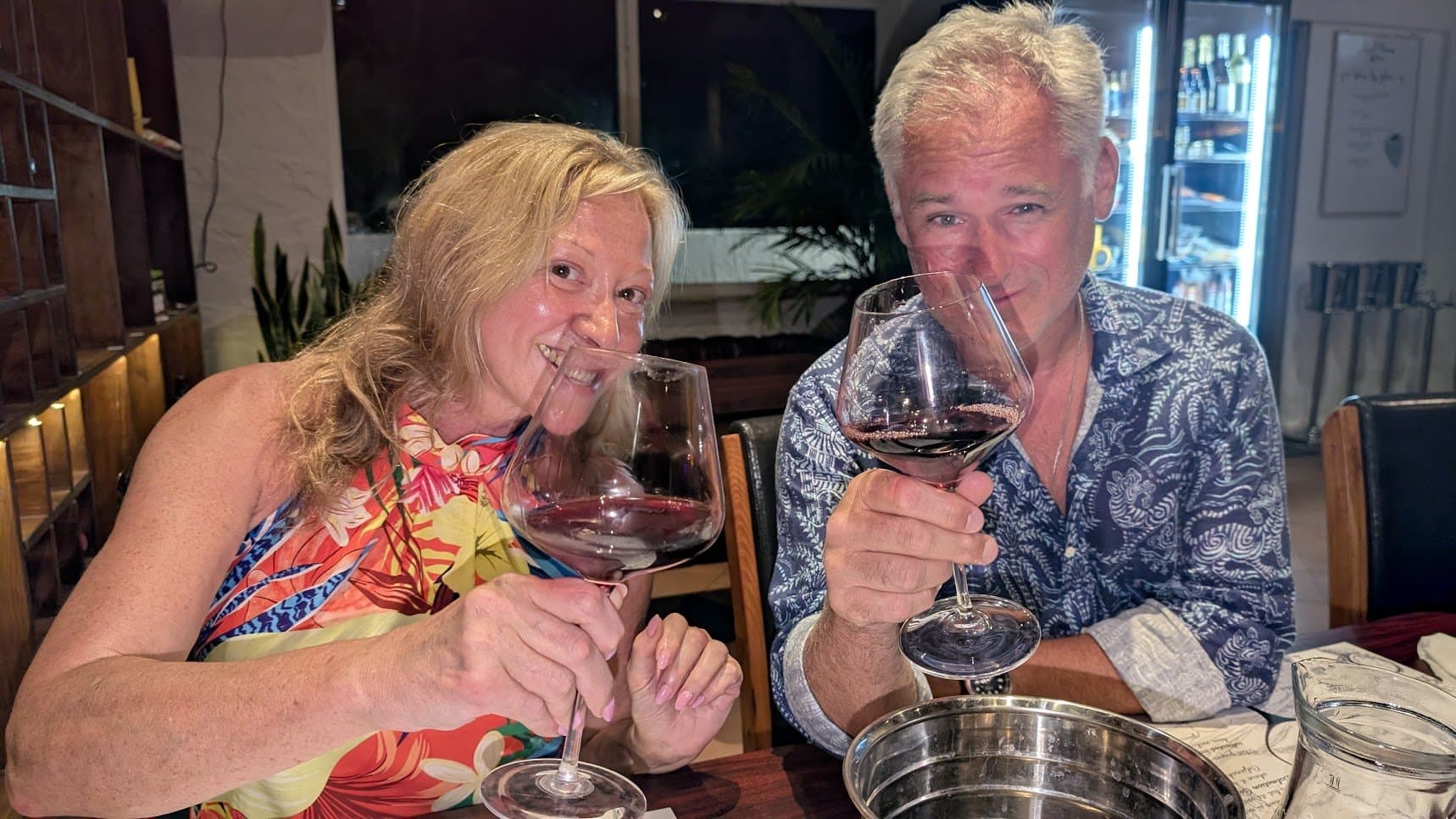
The $35 tasting includes salami and cheese skewers with the six wines. They work well. If you want to eat a proper meal alongside the experience, order more.
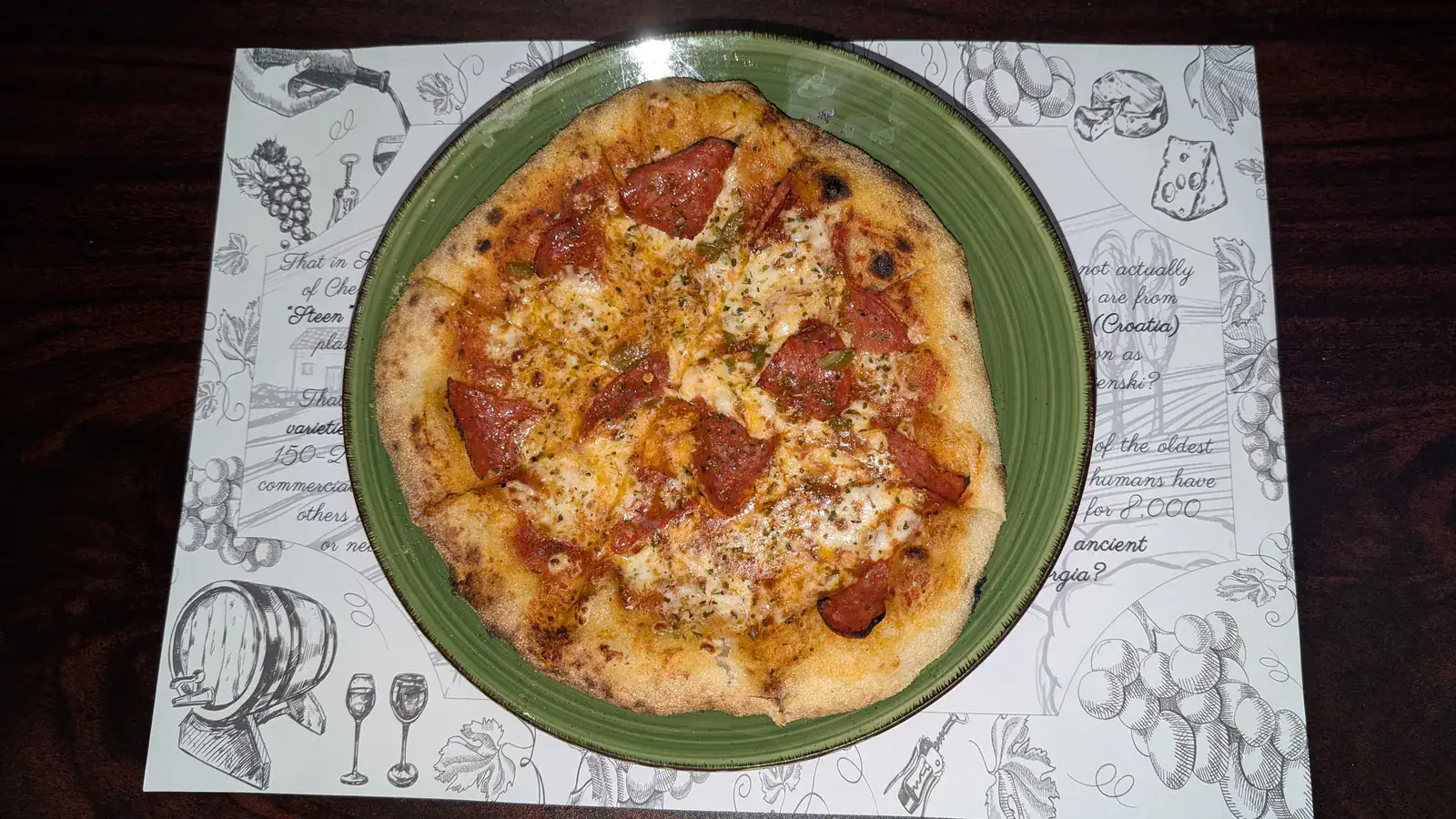
Two things worth adding: the four cheese pizza with pepperoni is a personal food hack. Wine Not has both a pepperoni pizza with one cheese and a four cheese pizza without pepperoni. Ask to combine them. It works better than either original and holds up through the reds.
The baked camembert with toast points was the better pairing. It comes with apple, honey, and extra honey on the side. The contrast between the gooey center and the crispier baked edge on the rind is genuinely difficult to decide between, because both are excellent. It worked with every wine from the Sauvignon Blanc through the Kumusha.
The Practical Details
Wine Not is in French Harbour. The African Safari tasting is $35 per person and includes six wines and salami and cheese skewers. The tasting runs periodically rather than on a fixed schedule. Message them on WhatsApp at +504 3317-1094 to ask about upcoming dates.
Pro Tip: Arrive on time. The pour sequence is intentional, and the context Martin gives at each bottle sets up the next one. Coming in late means missing the thread that ties the whole evening together.
Good for: couples, groups looking for something different on a Saturday night, wine drinkers at any knowledge level, anyone who wants to come away knowing more than they arrived with.
See the Wine Not listing and the previous Around the World tasting review