
-
Cart
No items added to cart
Subtotal {{ currencyFormat( getSubtotal() ) }}Continue -
Sign In/Register
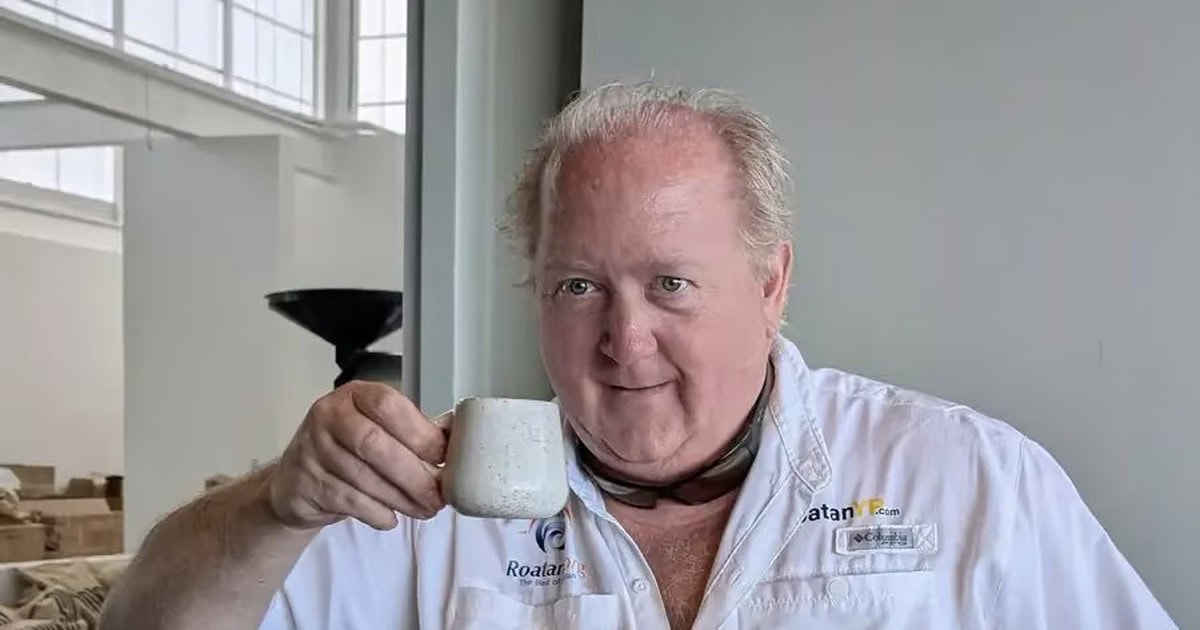
I’ve loved the smell of coffee my entire life.
Coffee cake, coffee ice cream, coffee-flavored anything. I’m in. I spent a good portion of my college years studying hotel and restaurant management, where tasting coffee was part of the curriculum. Not drinking it. Tasting it. The way a sommelier evaluates wine, working through the aroma, the body, the finish, without actually drinking a cup. Over the following decades, maybe a handful of professional settings brought me back to that same exercise. A corporate event here, a hospitality function there. Never a daily habit. Always from the outside looking in.
Fifty-eight years old. Twenty years coming to Roatan. And I had never once sat down with a cup of coffee.
Then Spirit Origin Coffee opened a 12,000 square-foot specialty coffee destination on the main road near First Bight, introduced Central and South America’s first Coffee Omakase, and I decided it was finally time.
I broke the streak.
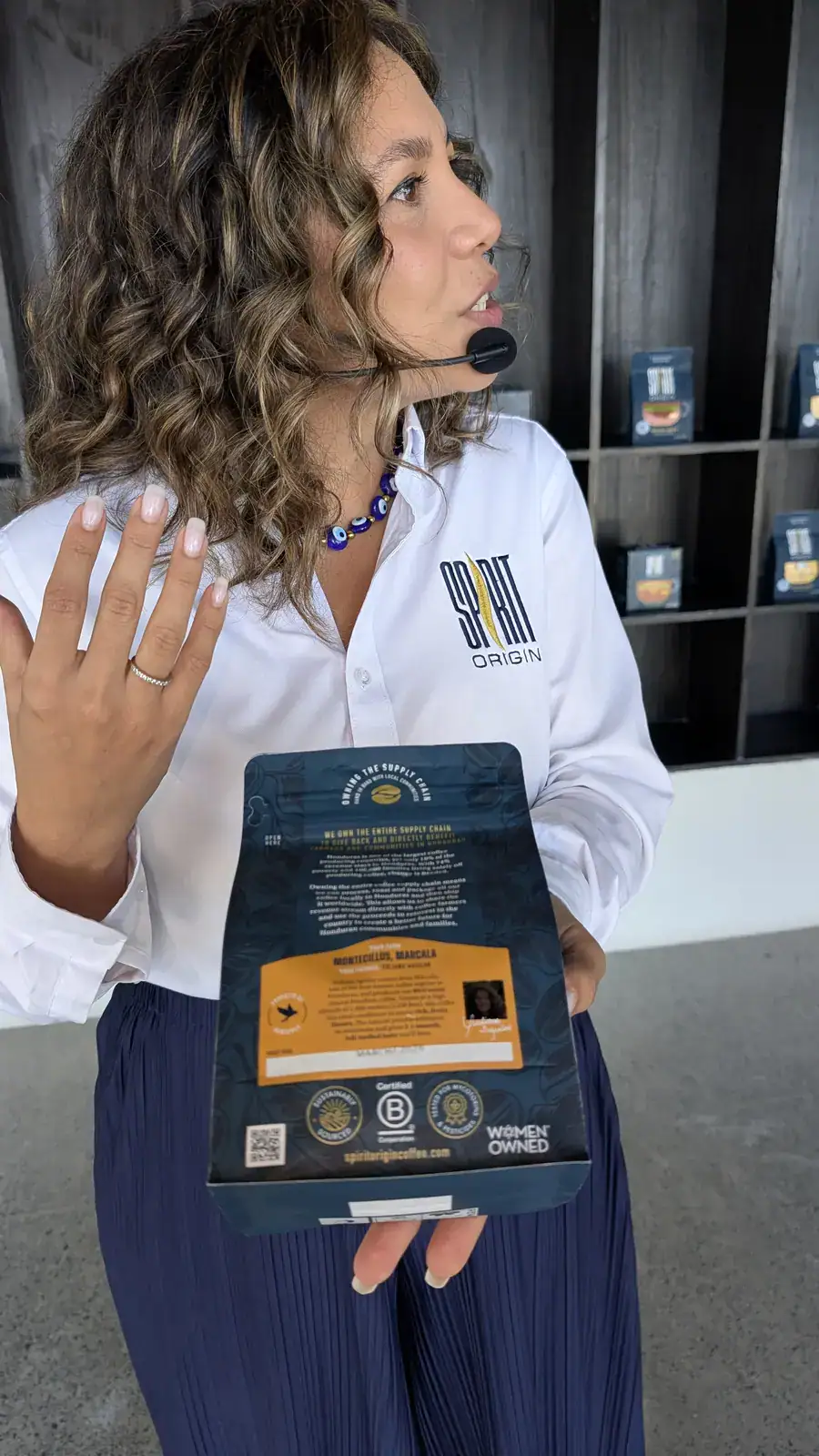
Spirit Origin wasn’t built to be just another café. Co-founded in 2020 by Kathya Irias, a native Honduran industry veteran, and Paul Gromek, who works on-site daily as CEO, the Roatan flagship opened February 12, 2026, and earned a spot on Honduras’ Top 20 Coffee Shops 2026 by Cafexpo Honduras within its first months. The operation is B-Corp Certified, Women Owned, and sustainably sourced. Every bag of coffee is tested for mycotoxins and pesticides before it leaves the building.
The mission runs deeper than good coffee. Honduras is one of the largest coffee-producing countries in the world, yet only 10 percent of coffee revenue stays in the country. Seventy-four percent of the population lives in poverty, and 100,000 families depend on coffee farming to survive. Spirit Origin owns the entire supply chain, roasting and packaging in Honduras, to return as much value as possible to the people who grow it. Kathya personally locks in pricing with farmers over extended periods to protect them from commodity market swings. When you buy a bag here, that’s the story you’re buying with it.
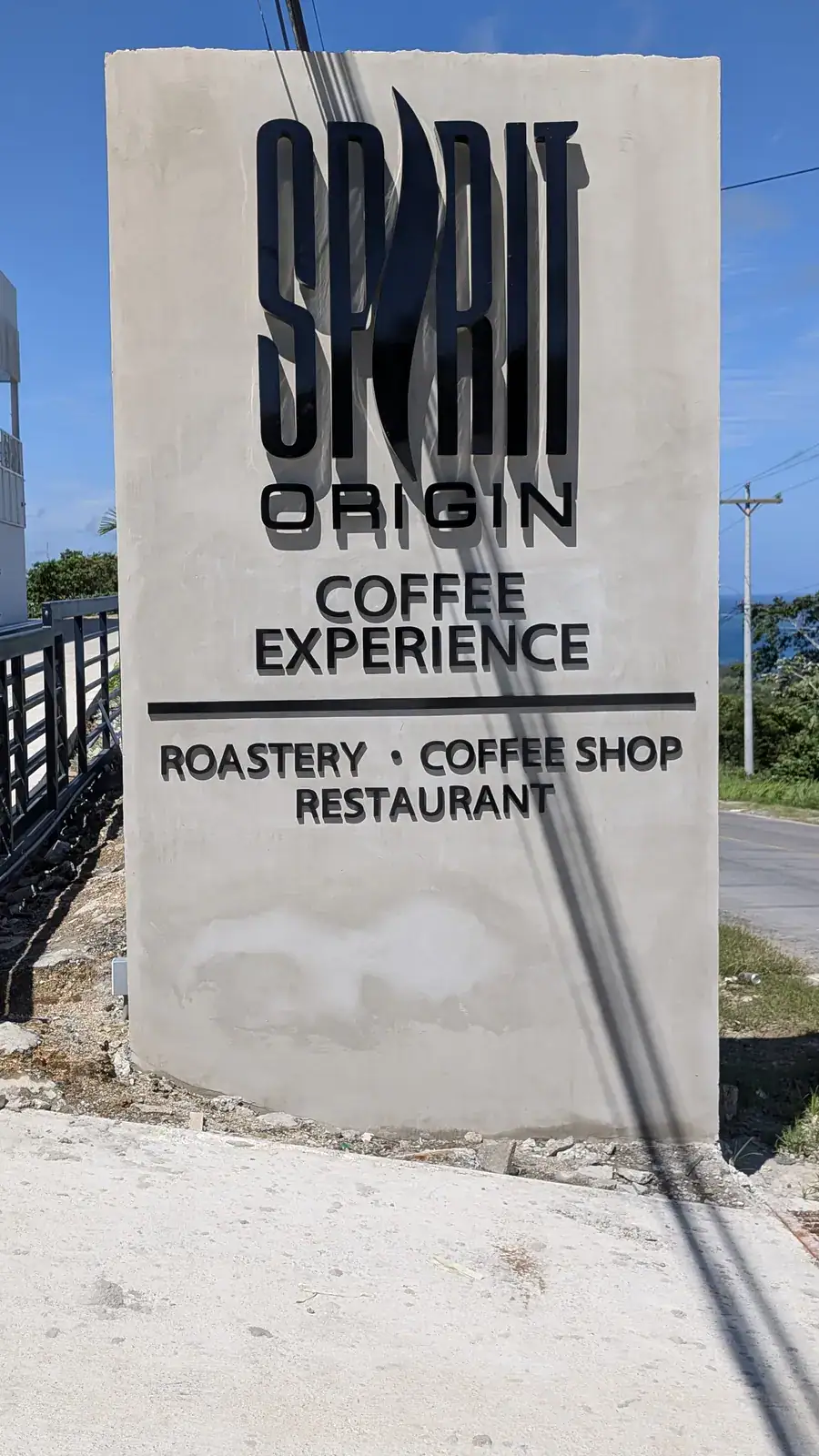
You’ll find Spirit Origin on the south side of the main road near First Bight, 30 meters before the turn toward Parrot Tree Plantation, right across from the roadside pull-off known as “The View.”
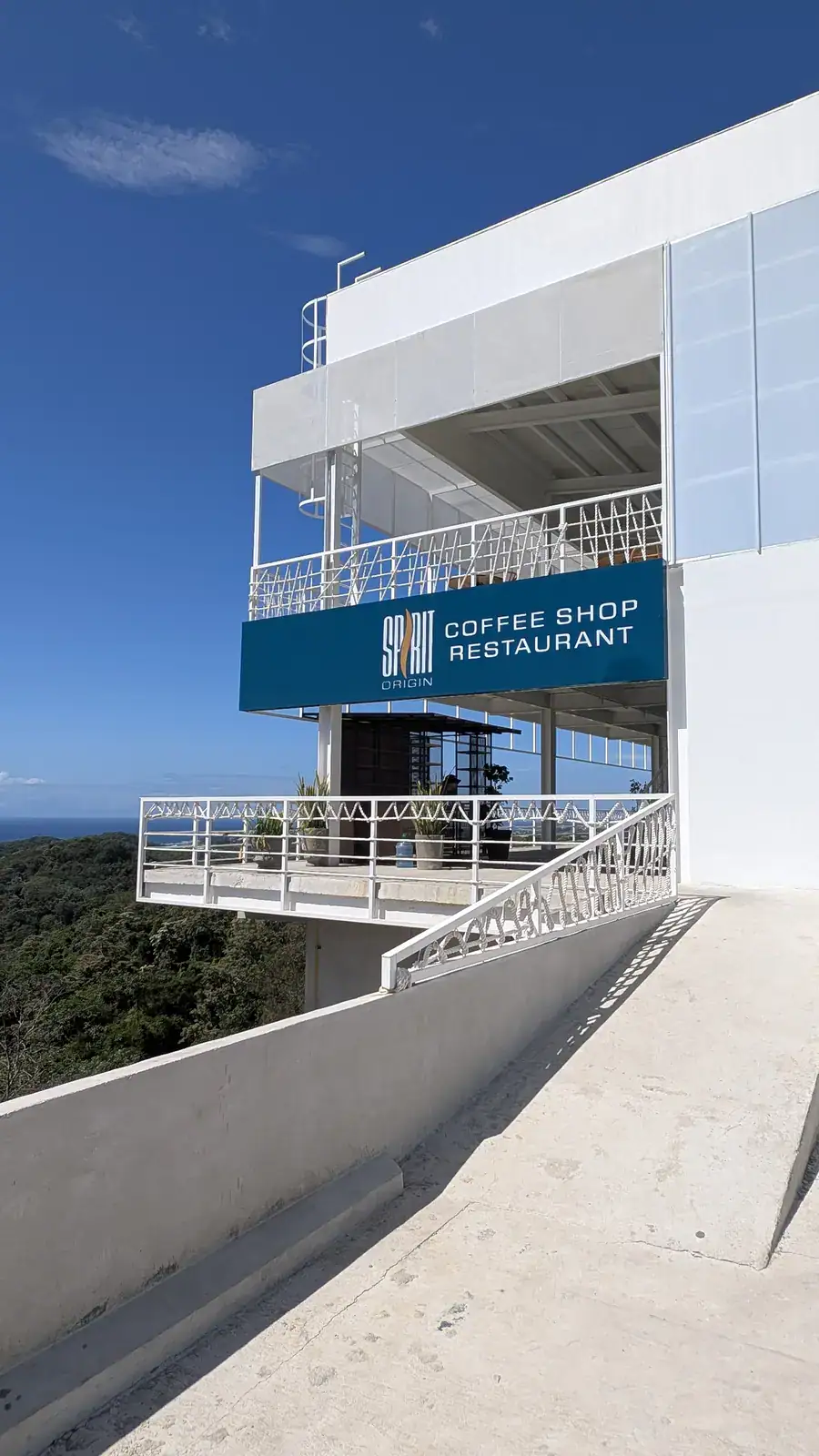
The 12,000 square-foot building sits on a ridgeline that catches panoramic views of both the north shore reef and the south shore open water simultaneously, a vantage point that’s rarer than it sounds on this island.
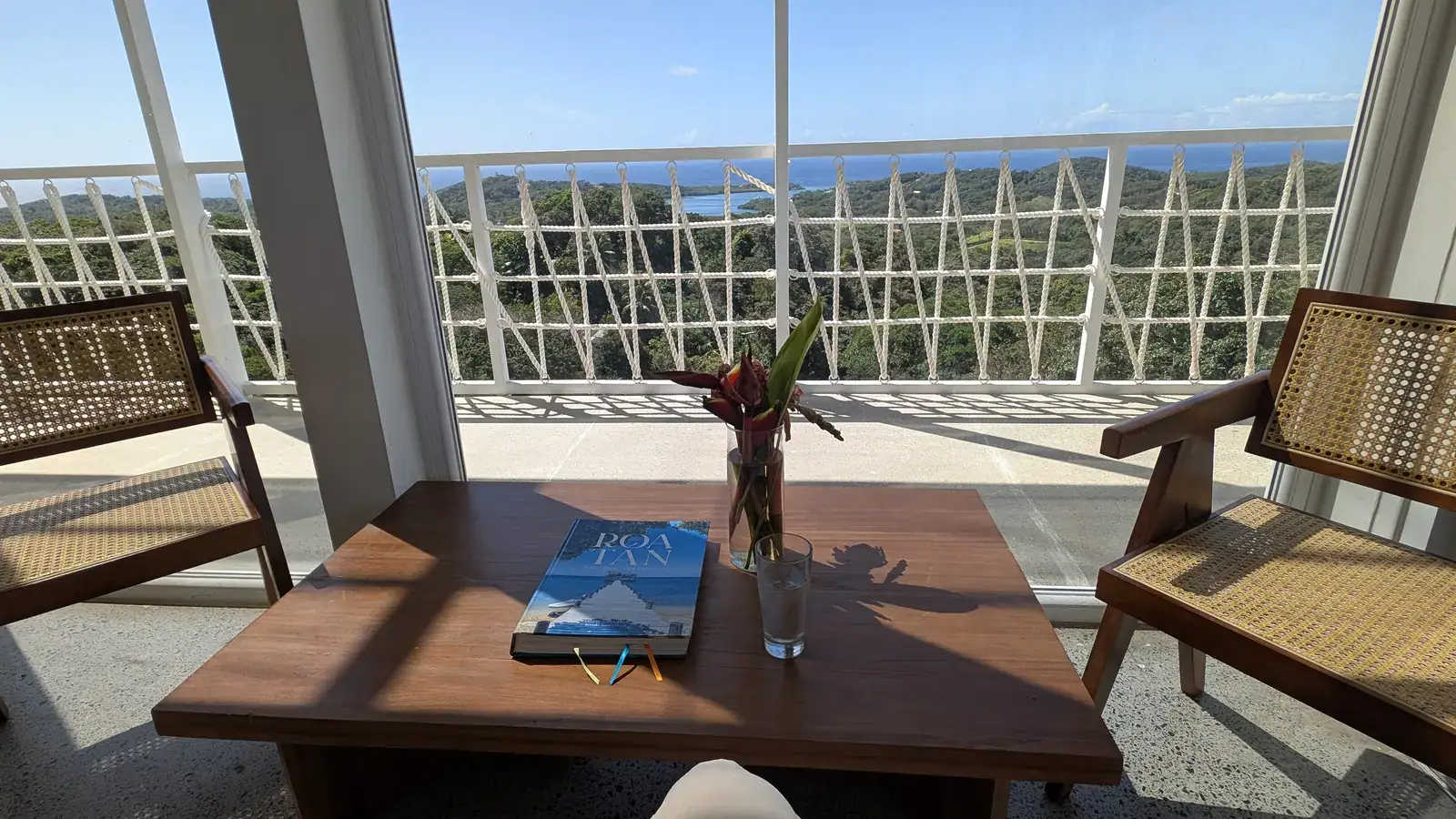
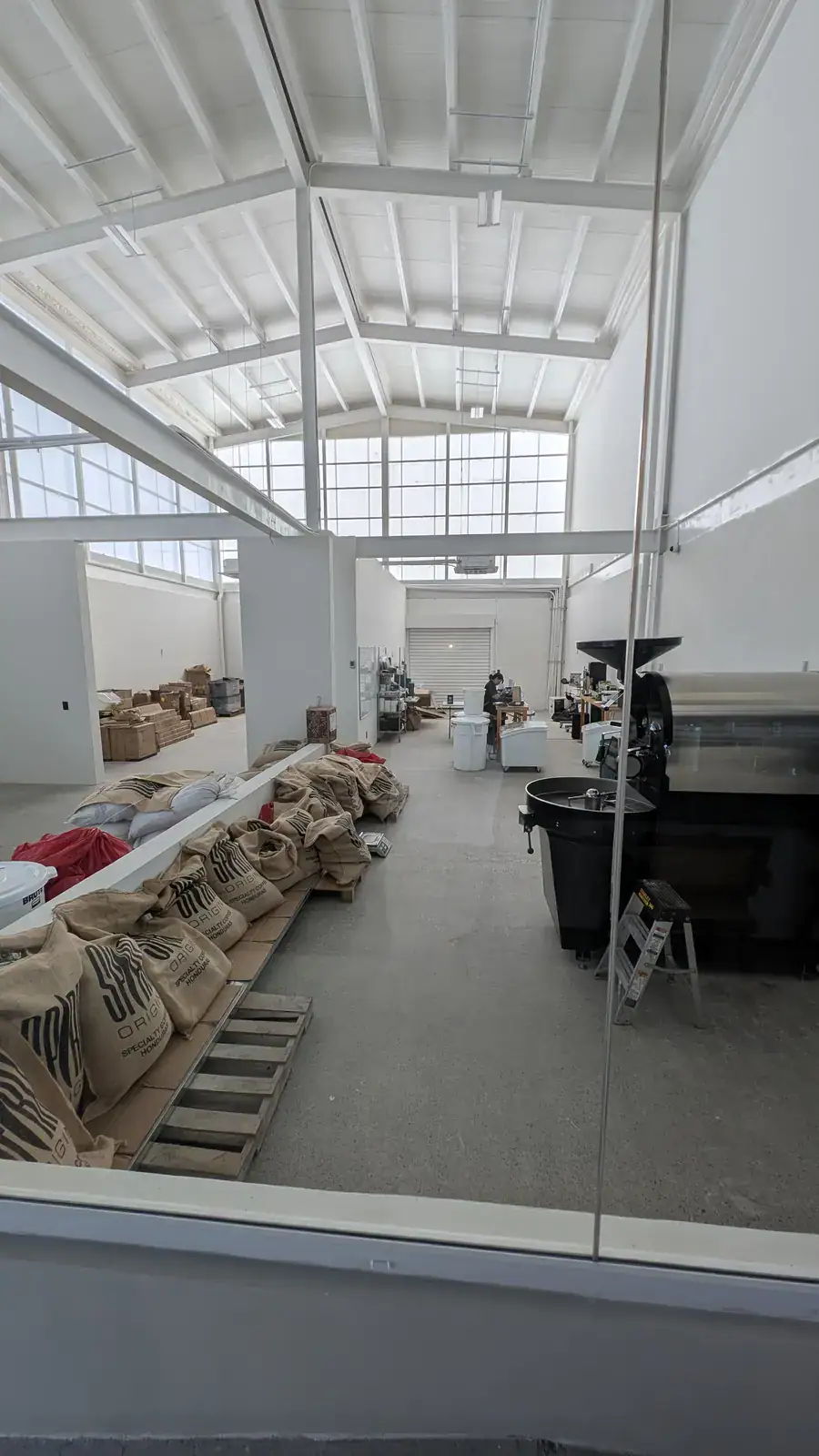
The layout reads as three stories from the outside due to double-height ceilings inside. The ground floor houses the Roastery and the Omakase room. The second floor is home to From the Roots restaurant, with a bakery counter that doubles as a coffee shop during breakfast service.
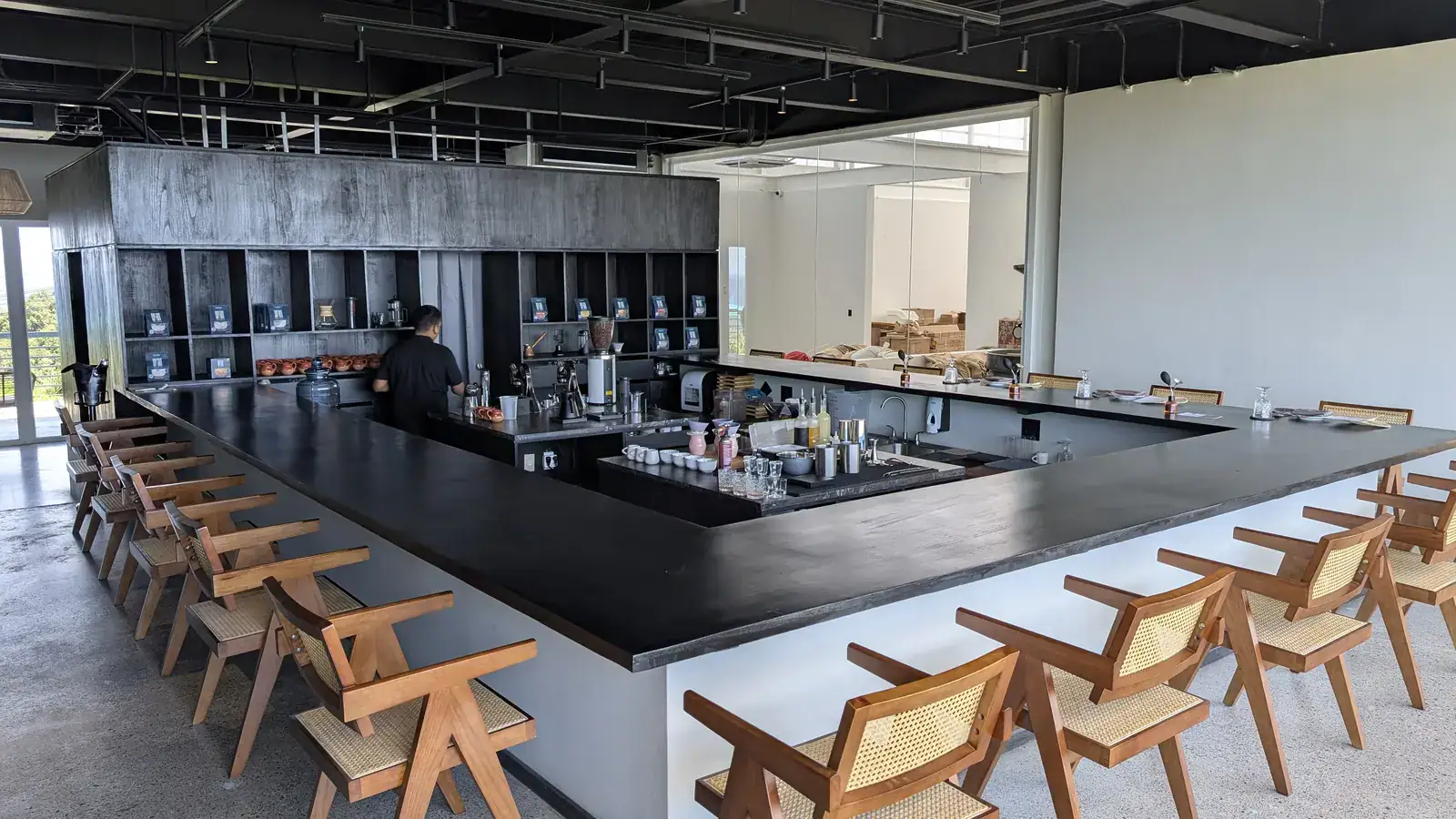
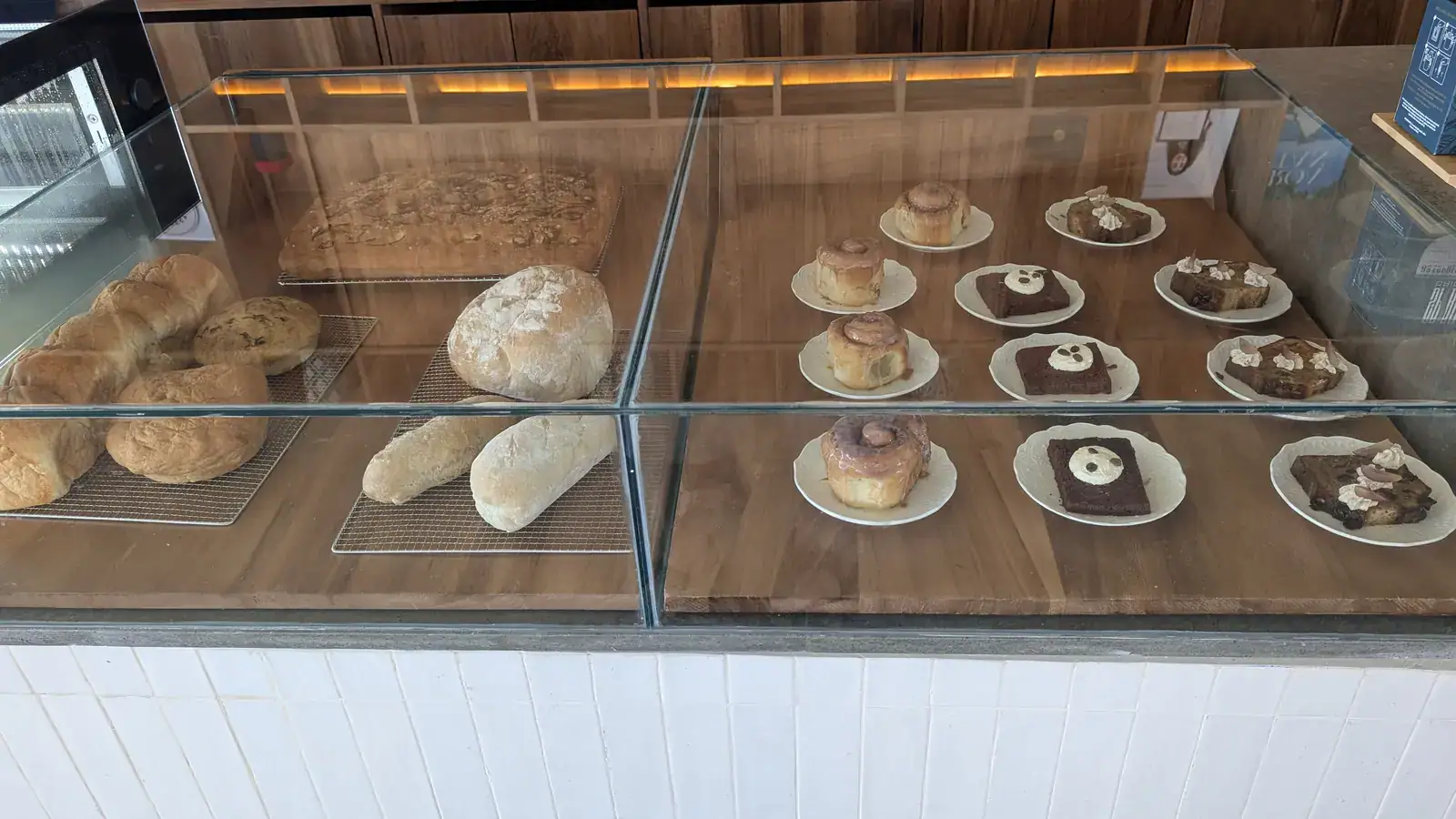
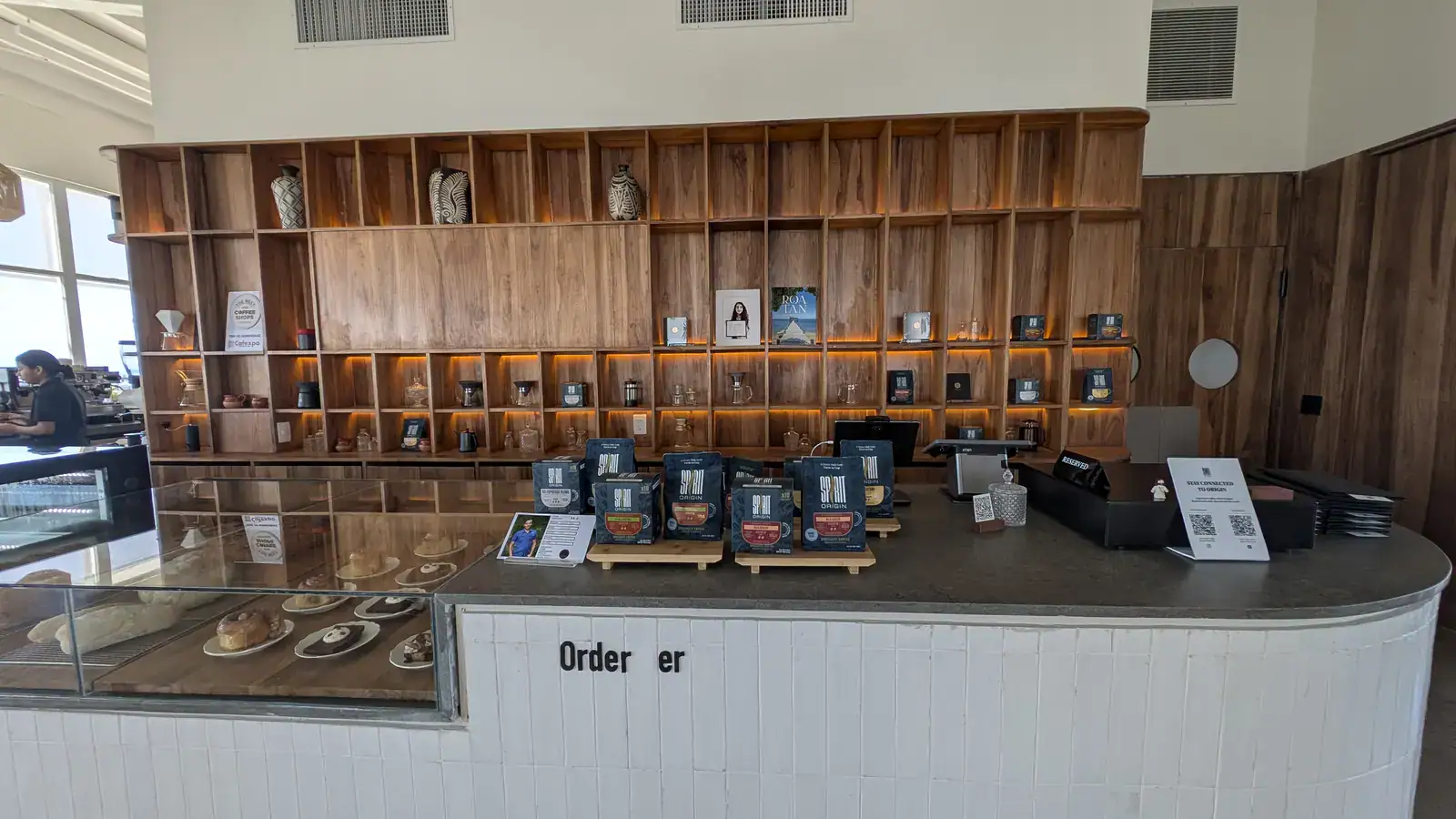
The Coffee Omakase is $99 per guest and runs 75 to 90 minutes depending on the group, the stories Kathya tells, and the questions that come up. Sessions run daily from 8 AM to 4 PM, every two hours: 8 AM, 10 AM, 12 PM, and 2 PM. The room seats 21 guests per session, with the option to book all 21 seats for a private event. Reservations are required at least 24 hours in advance.
Pro Tip: Tuesday, Wednesday, and Thursday tend to be the best days to book. Cruise ship traffic brings more visitors to the island mid-week, which means fuller sessions and a livelier room. Prefer something quieter? Weekend tastings tend to draw smaller, more intimate groups.
The format is four paired tastings, a coffee or coffee-based drink followed by a food pairing, with a palate cleanser at the midpoint, nine items in all. Your host is Kathya herself, working the room with a wireless headset mic and a professional PA system. Her voice is soft and deliberate, and the amplification is subtle enough that it never feels like a lecture. It feels like a conversation she’s having specifically with you.
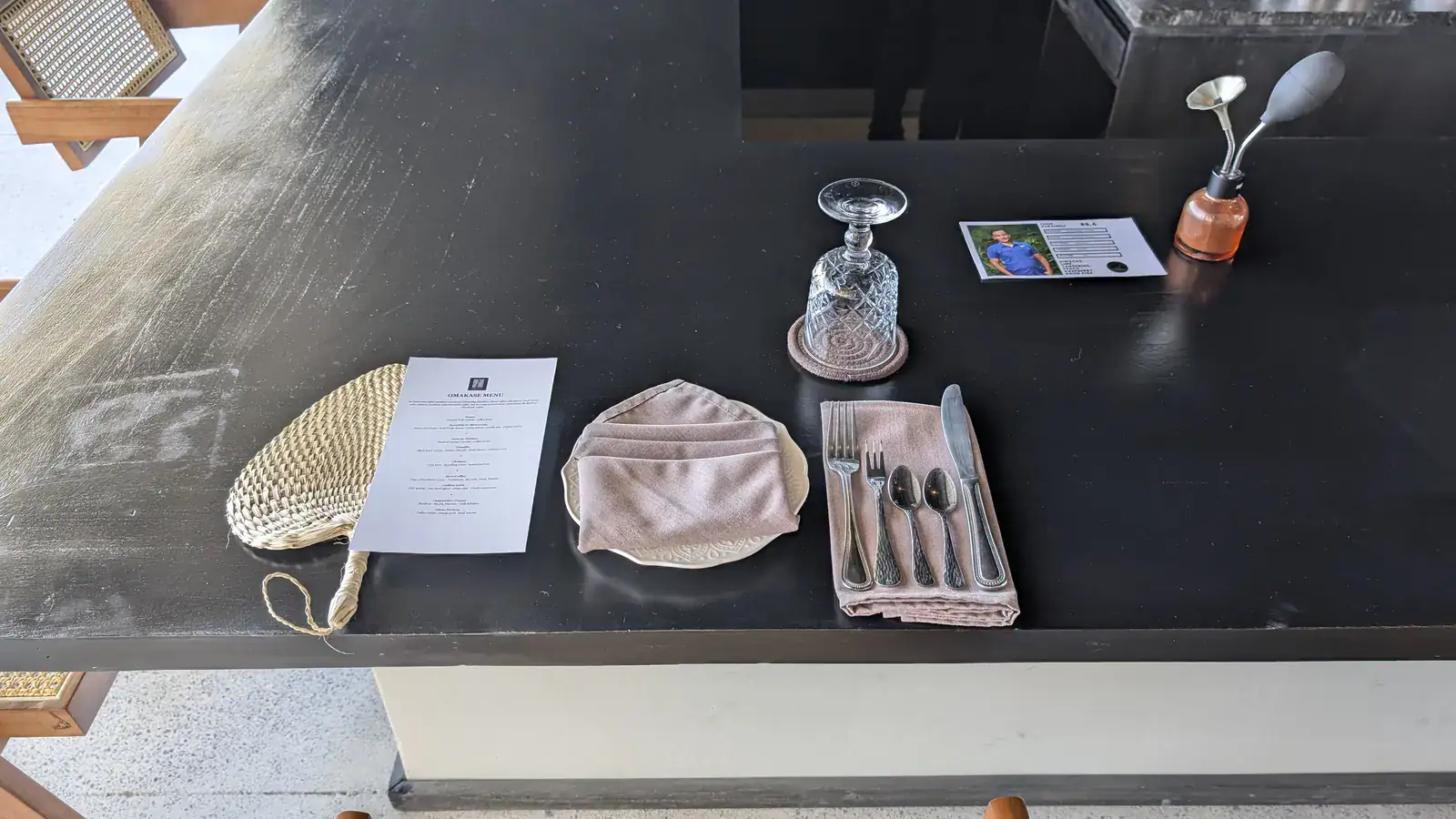
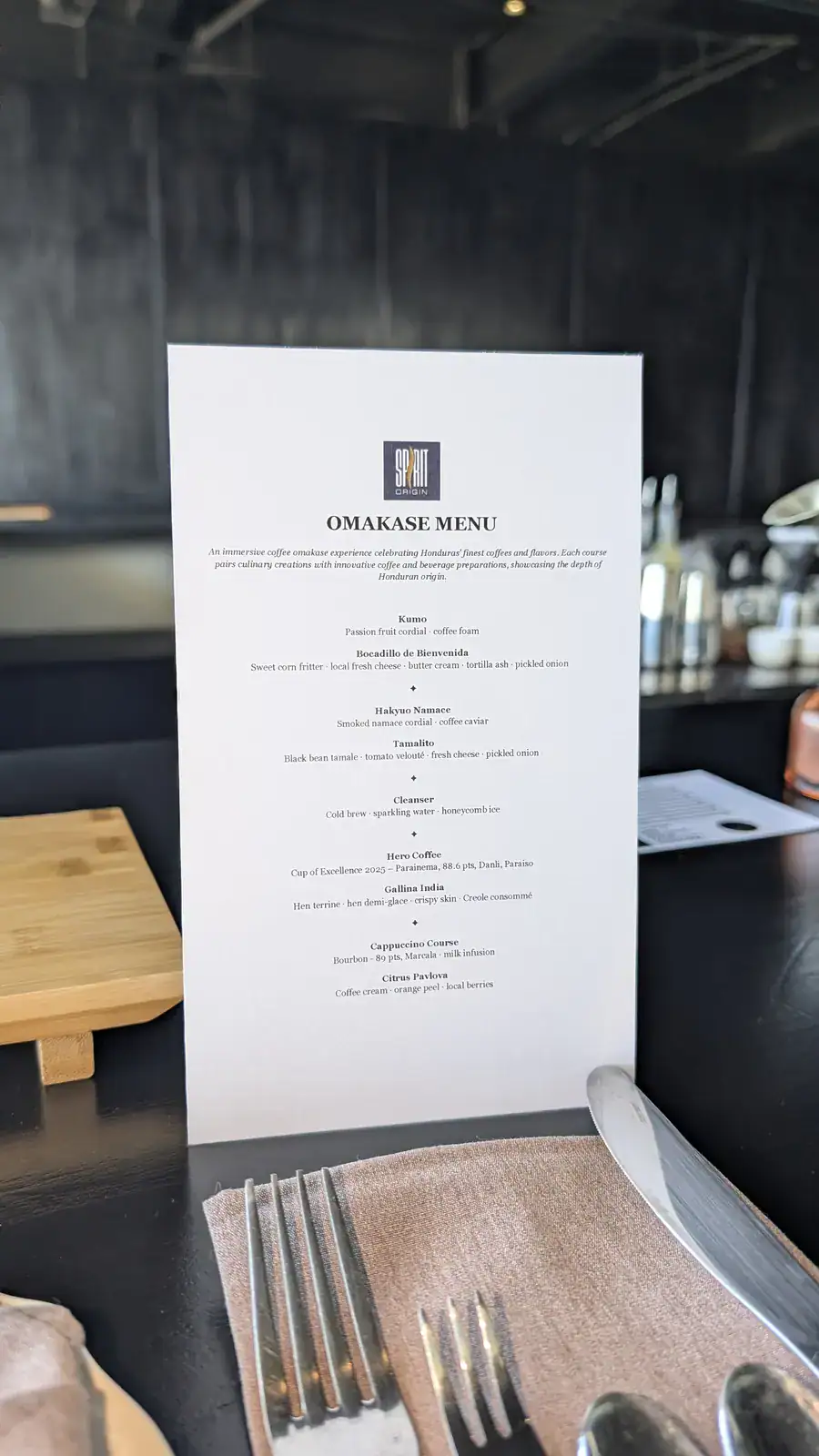
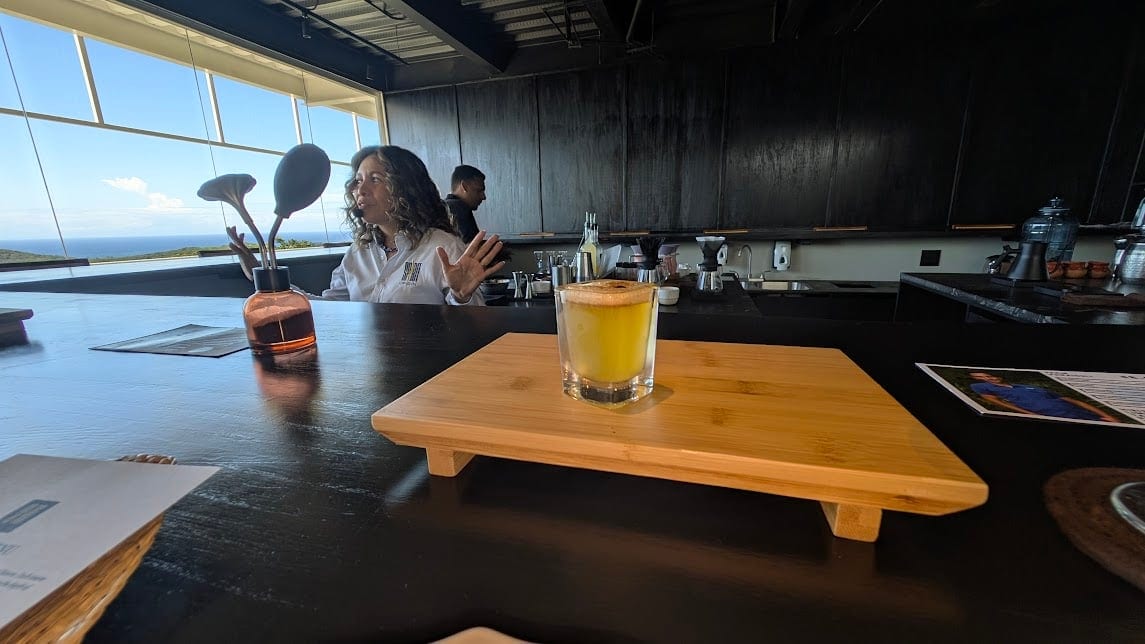
The Kumo arrives first, a passion fruit cordial topped with coffee foam and a floating coffee bean, served cold. If you’re expecting a coffee drink, this will reframe the whole experience before it starts. It doesn’t lead with coffee. It leads with the Caribbean. Sweet, fruity, bright, the kind of drink that makes you feel like you’re exactly where you are: on an island, in the tropics, somewhere worth being. The foam and the bean are there, but the drink belongs to passion fruit. The opening statement is clear. This experience will not be what you expect.
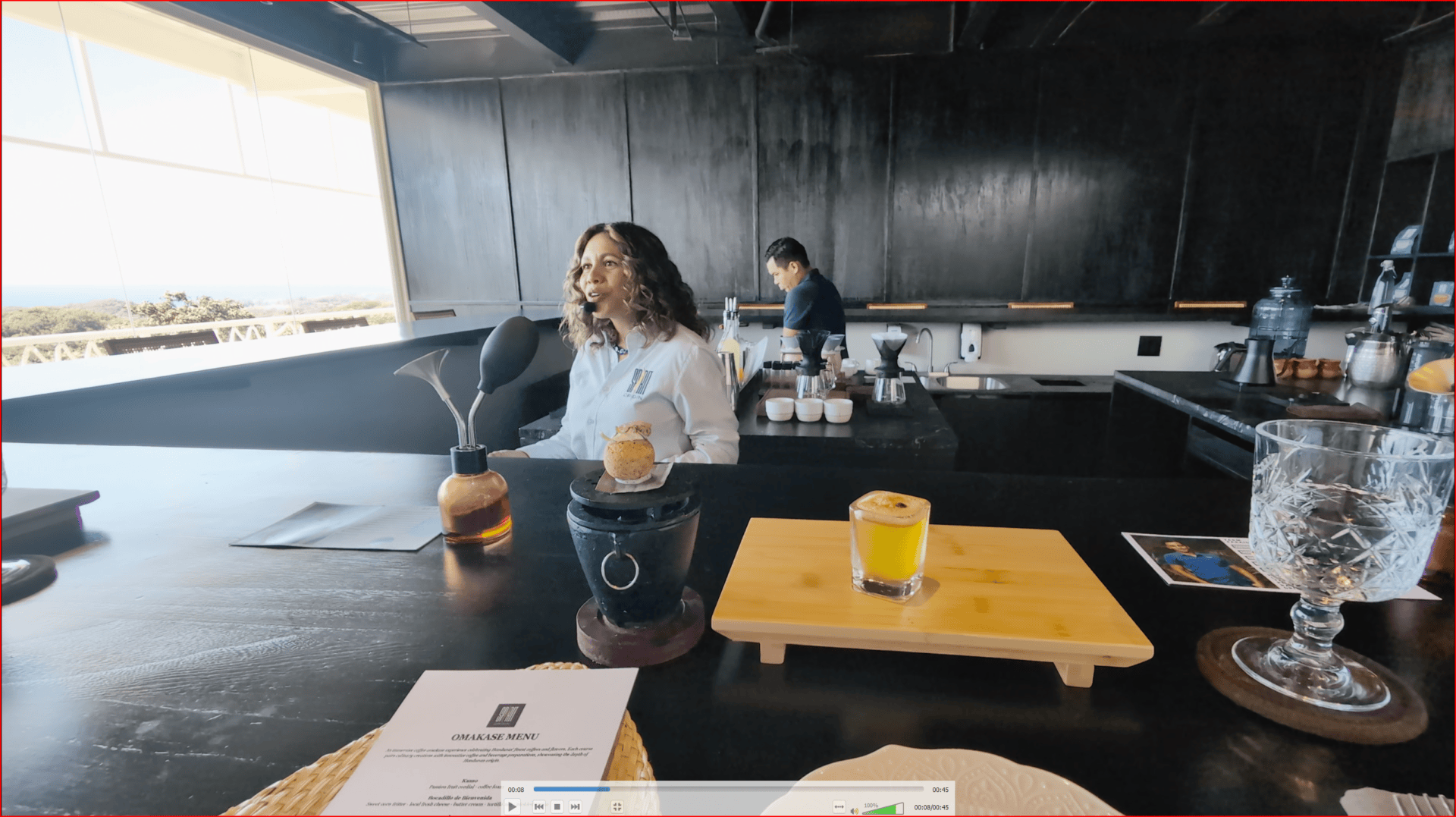
The Bocadillo de Bienvenida follows: a sweet corn fritter topped with local fresh cheese, butter cream, tortilla ash, and micro pickled red onion. The contrast to the Kumo is immediate and intentional. Where the cordial was sweet and light, the fritter is savory and grounded. That micro pickled onion on top is a small detail with a clear message. You’re in serious hands here.
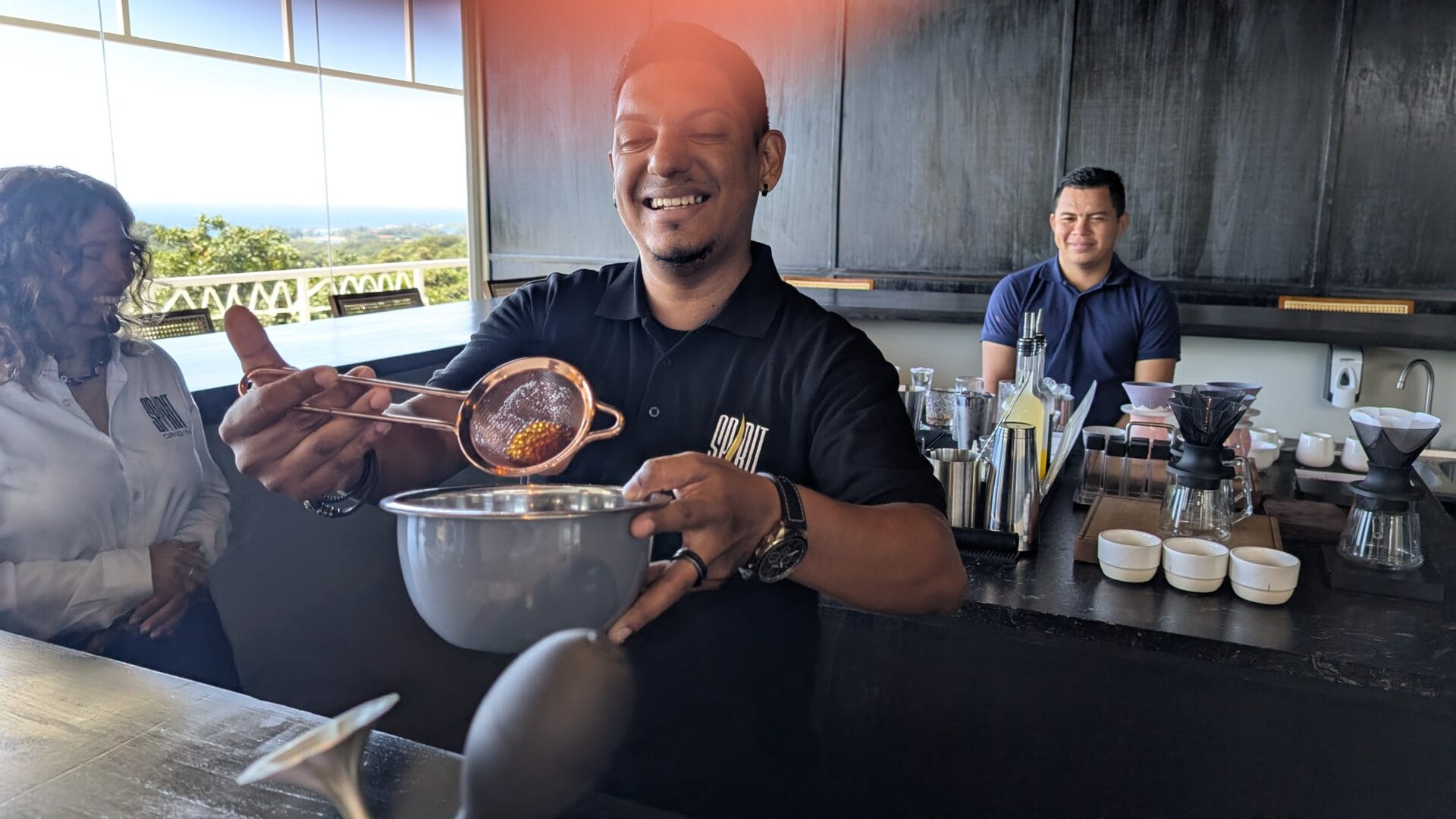
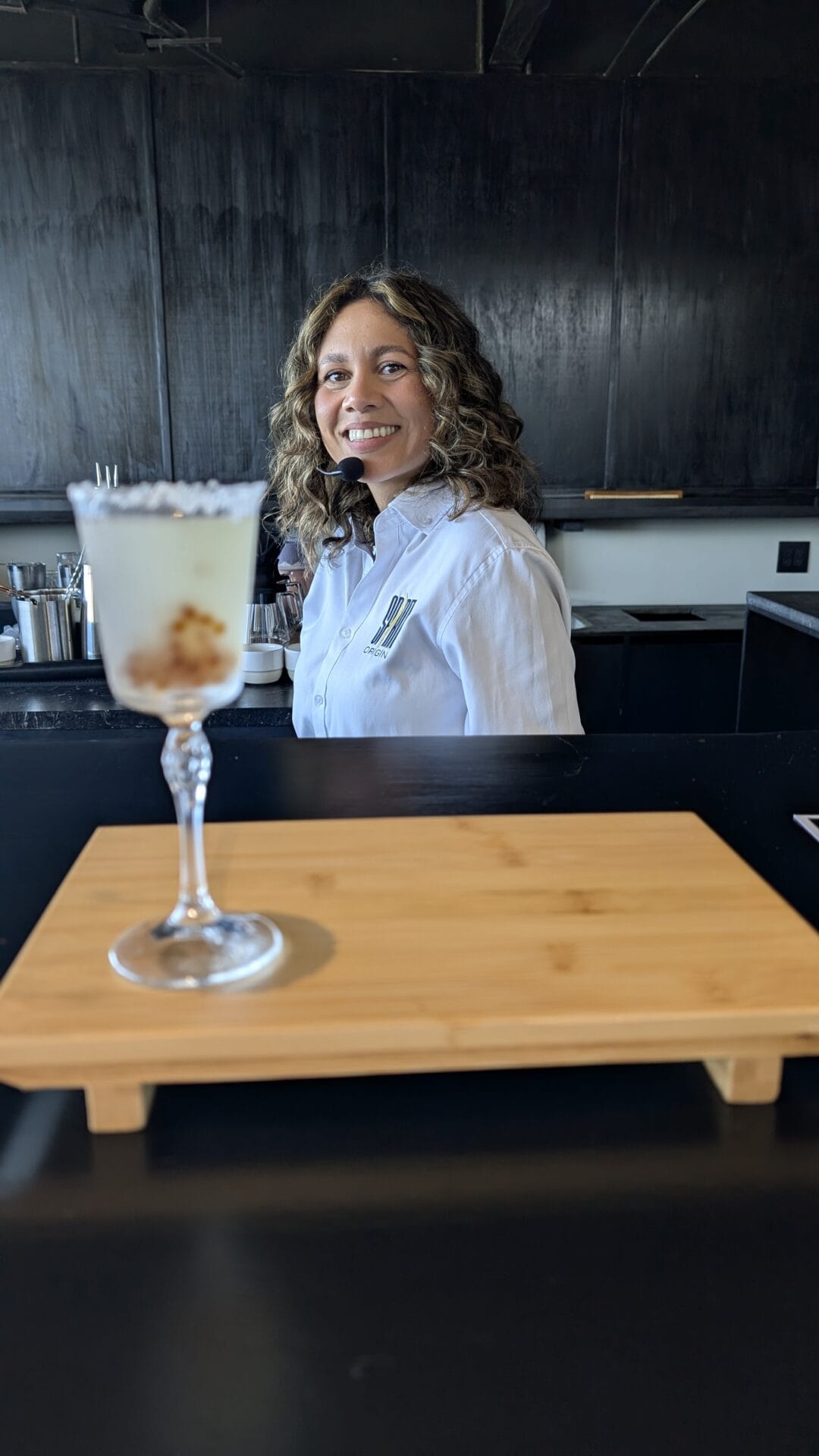
The Hakyuo Namace is what happens when a laboratory and a kitchen share the same creative brief. A smoked namace cordial served with coffee caviar: spherified coffee pearls engineered to look and behave exactly like fish roe. If you’ve ever watched modernist cuisine and wondered what the point was, this is the answer. The technique disappears into the experience. You pick up a pearl, there’s a brief moment of texture, and then a clean hit of pure concentrated coffee. Elegant. Precise. The kind of thing that belongs equally in a Michelin tasting room and a serious coffee bar. Easily the most technically impressive of the four drinks.
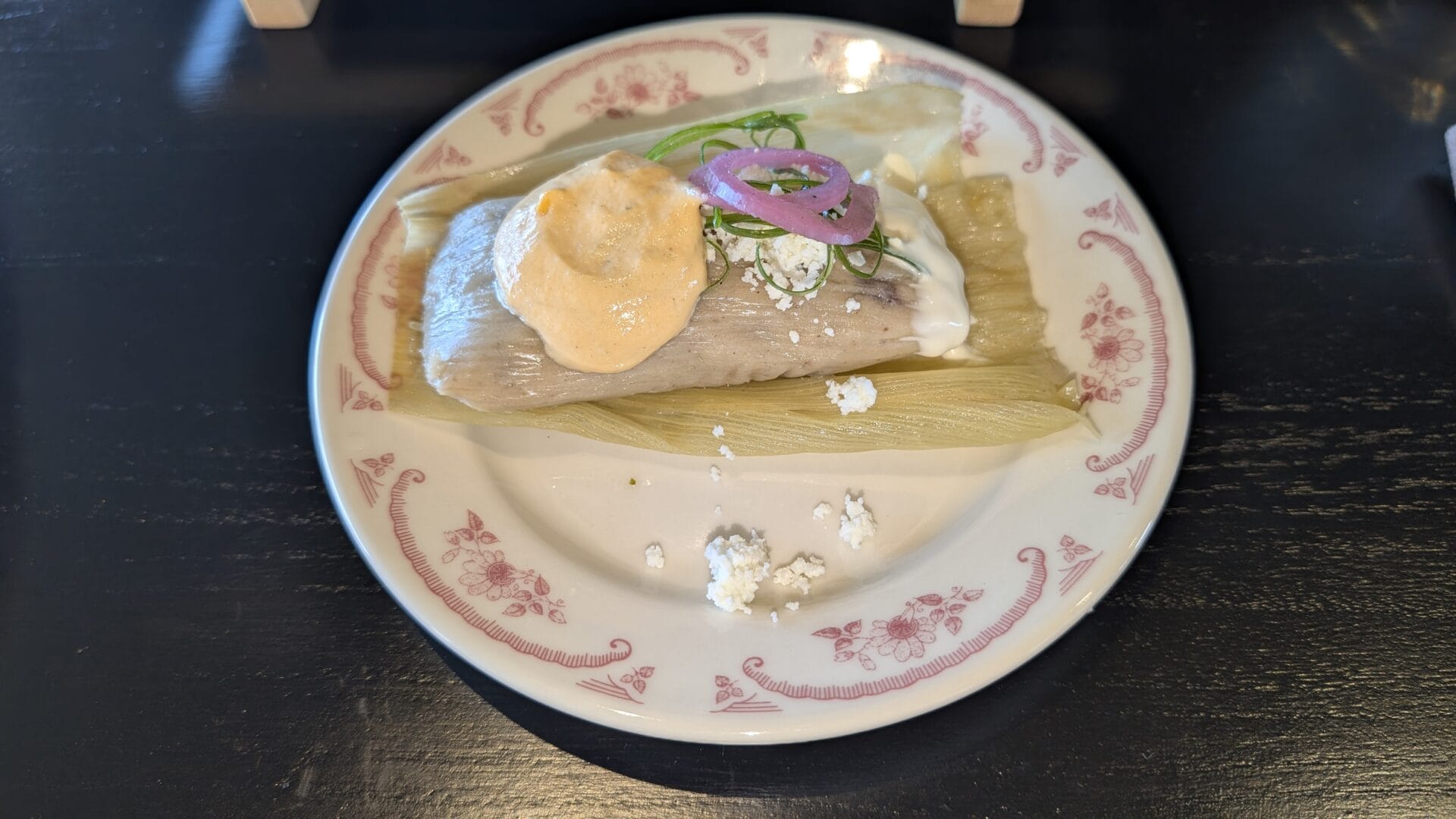
The Tamalito earns its place without apology. A black bean tamale with tomato velouté, fresh cheese, and pickled onion. Think of the tamales your grandmother made, if your grandmother had access to premium organic ingredients and a culinary school education. The same soul, executed with a finer hand. The size is generous, and that’s intentional. If you’re doing the Omakase at breakfast or before an early lunch, this is the pairing that grounds you before the main event. Solid, comforting, and exactly what should come before the Cleanser.
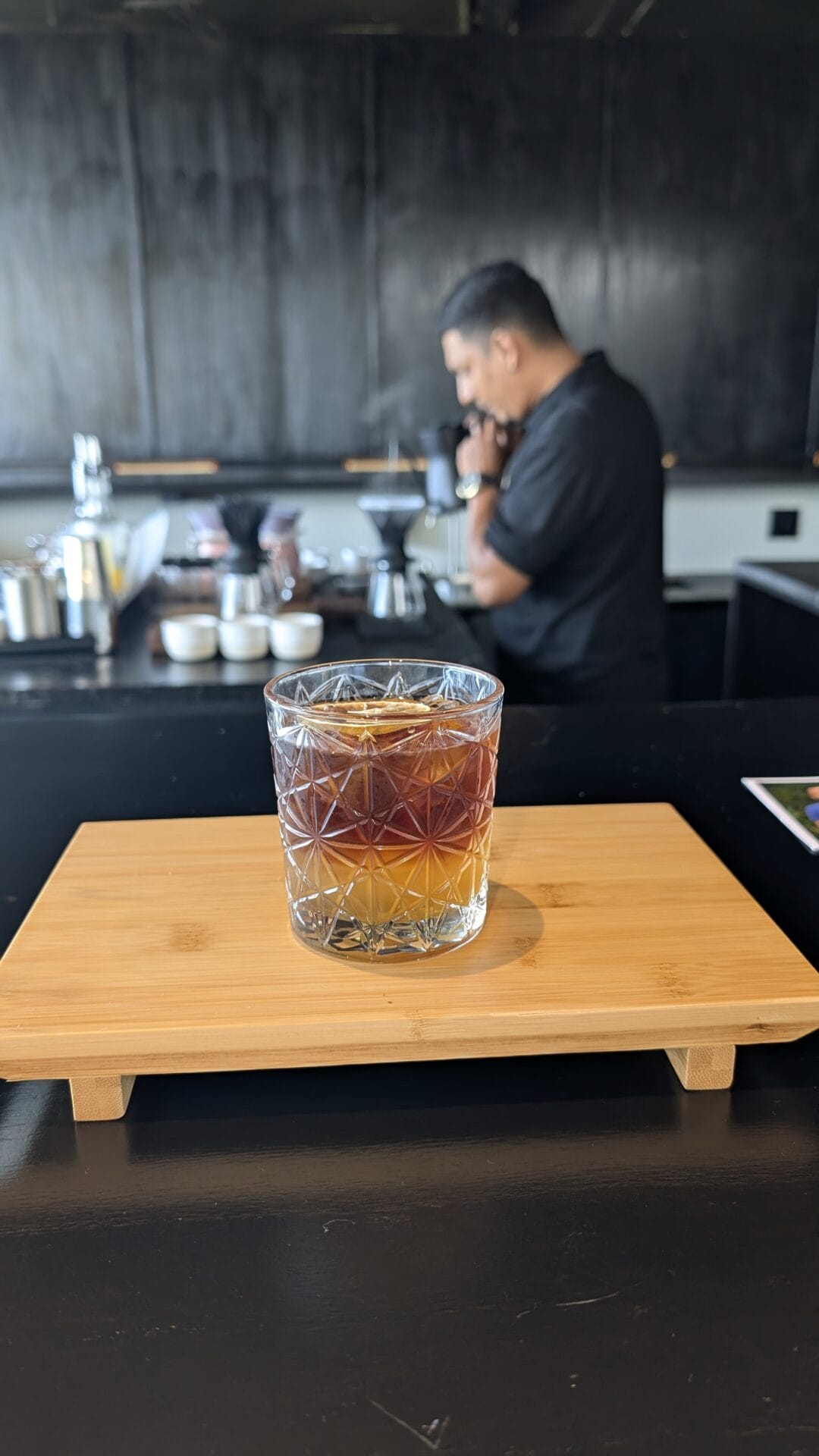
The Cleanser arrives as cold brew, sparkling water, and honeycomb ice, presented in a glass that shows off its distinct layers before you ever pick it up. Light and almost transparent on the palate. The coffee note is there, but it’s playing in the background, hinting at what’s ahead rather than announcing itself. If you’ve been through a wine tasting or a multi-course tasting menu, you know what a palate cleanser is supposed to do. This one does it. By the time the glass is empty, everything prior has been set aside, and you’re ready.
This is what you came for.
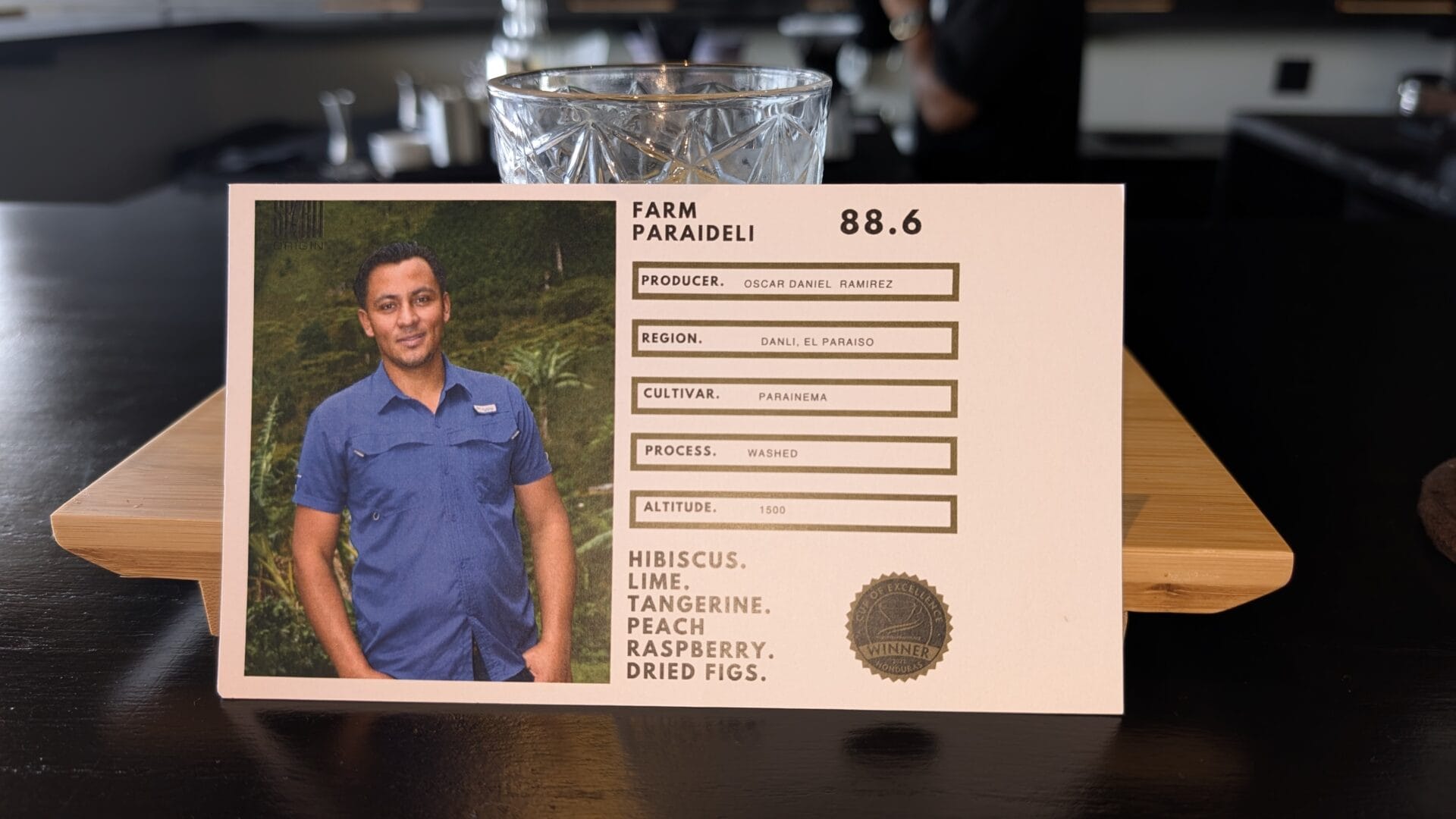
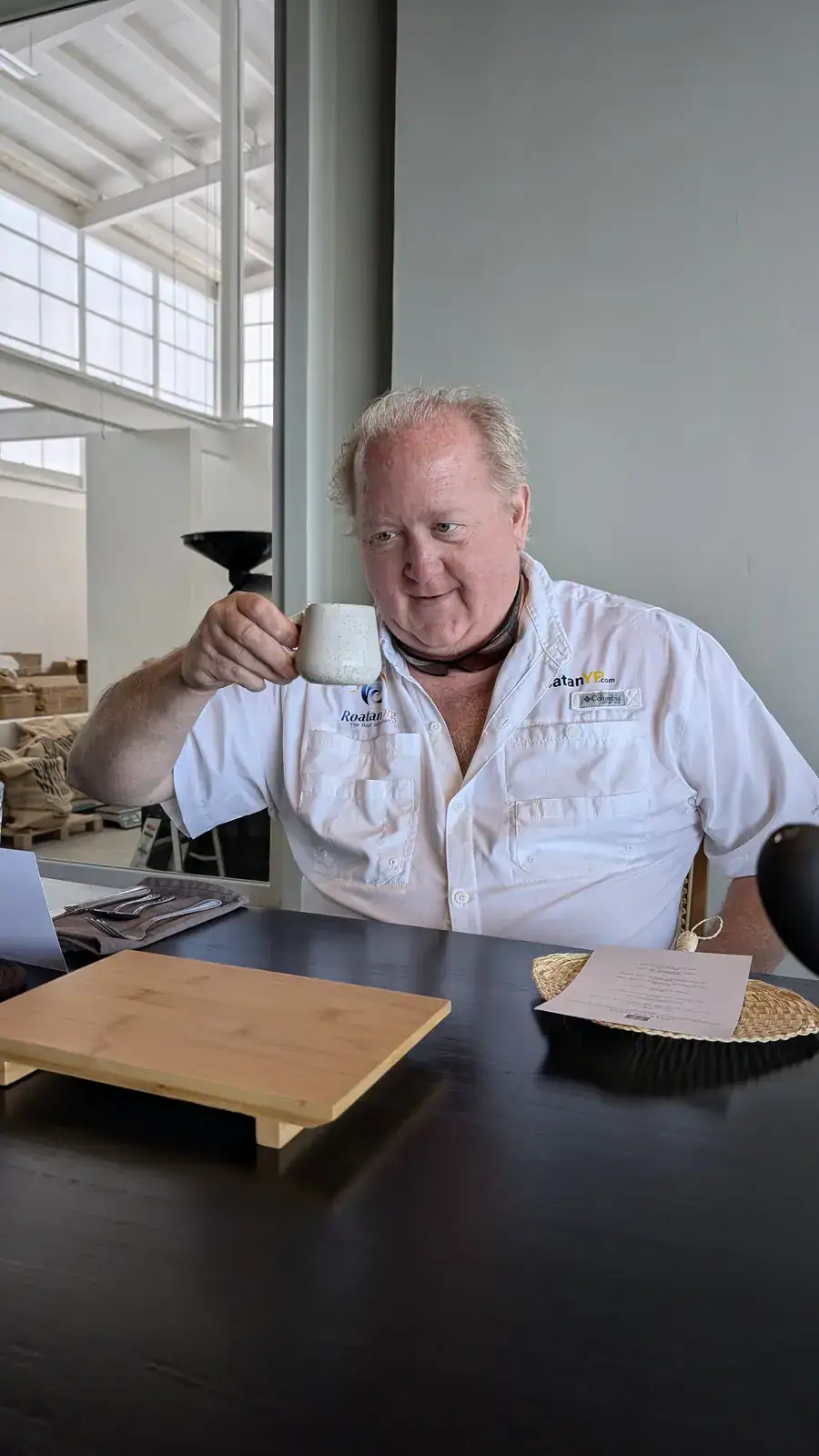
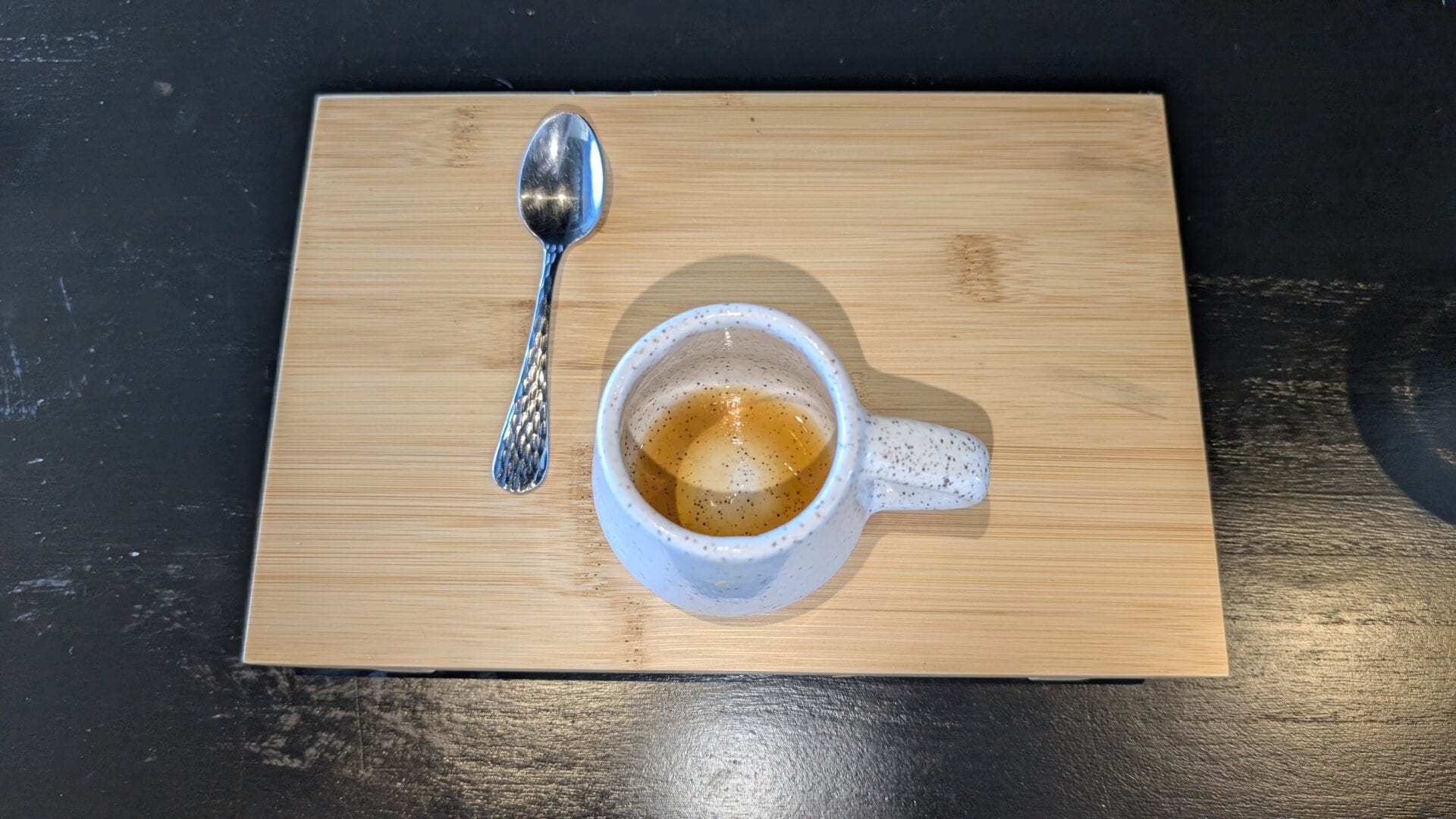
The Hero Coffee is a Cup of Excellence 2025 winner. An 88.6-point Parainema from Paraineli Farm in Danlí El Paraíso, grown at 1,500 meters by farmer Oscar Daniel Ramirez using a washed process. Tasting notes: hibiscus, lime, tangerine, peach, raspberry, dried figs. Served black. In a speckled ceramic mug.
I broke the streak.
Before the cup arrived, Kathya walked the room through the method. Coarse grind. Slow drip. Not the way most people use a cone filter, pouring all the hot water in at once and walking away. The proper method is deliberate: six slow pours of roughly 1.5 to 2 ounces of hot water, each one allowed to fully complete its journey through the grounds before the next begins. The coffee blooms between pours. The flavors develop in layers. The patience is the technique.
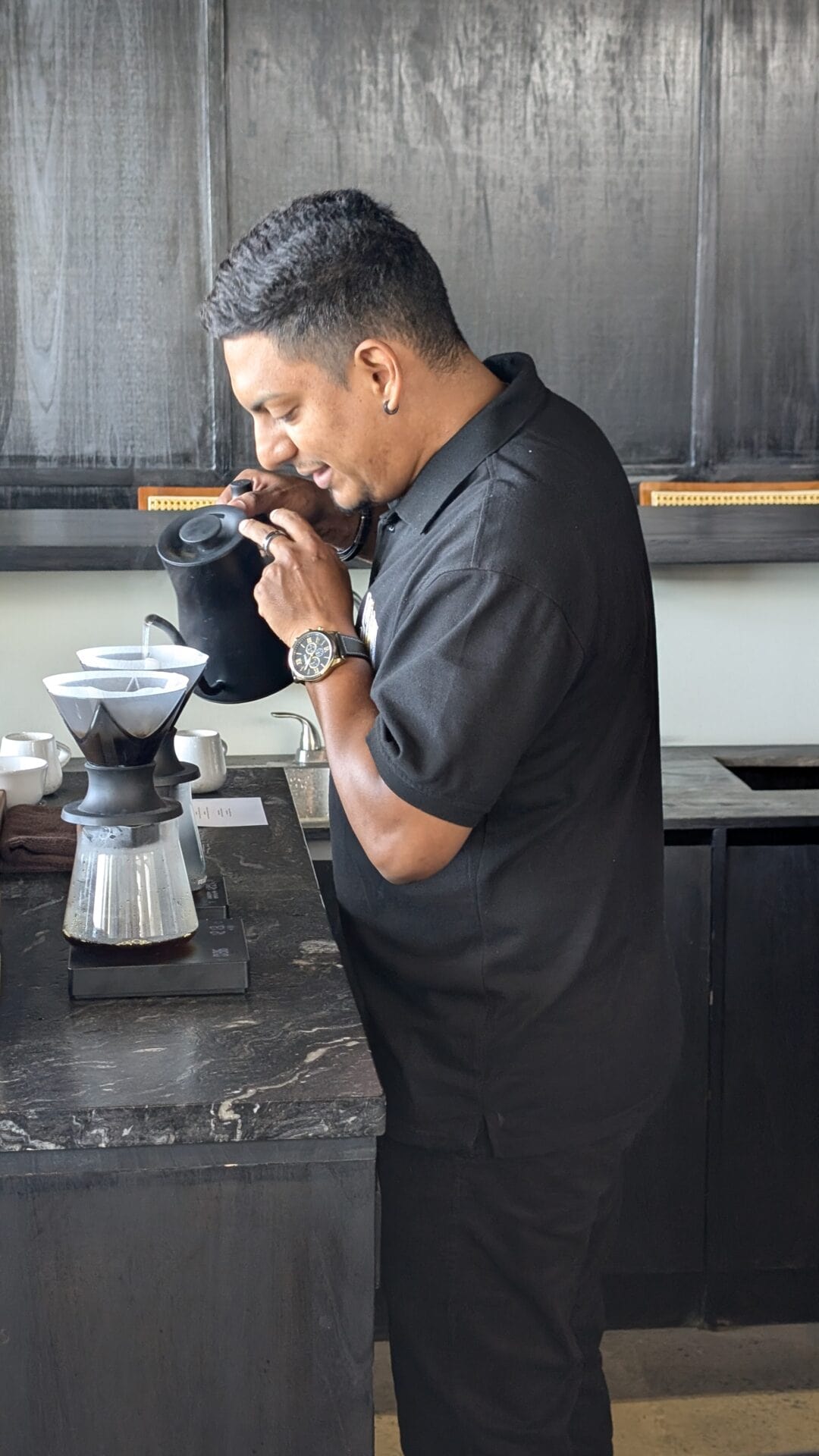
Pro Tip: If you use a cone filter at home, stop pouring all the water in at once. Make six slow pours of 1.5 to 2 ounces each, letting each fully drip through before the next. The difference in flavor is not subtle.
I had spent 58 years appreciating coffee from a professional distance. I lifted the mug, took my first careful sip, and stayed with it for a moment before going back for more. The hibiscus and citrus notes came through exactly as described, not in a way that required imagination, but in a way that made immediate sense of the description. The berry finish lingered. I finished the cup.
Whether I’ll develop a daily habit, probably not. But I understand now, in a way I didn’t before, what people mean when they talk about tasting the difference in quality coffee. This was the right first cup.
The Gallina India chicken arrives paired with the Hero Coffee, served alongside with some consommé in a traditional Honduran terracotta clay pot.
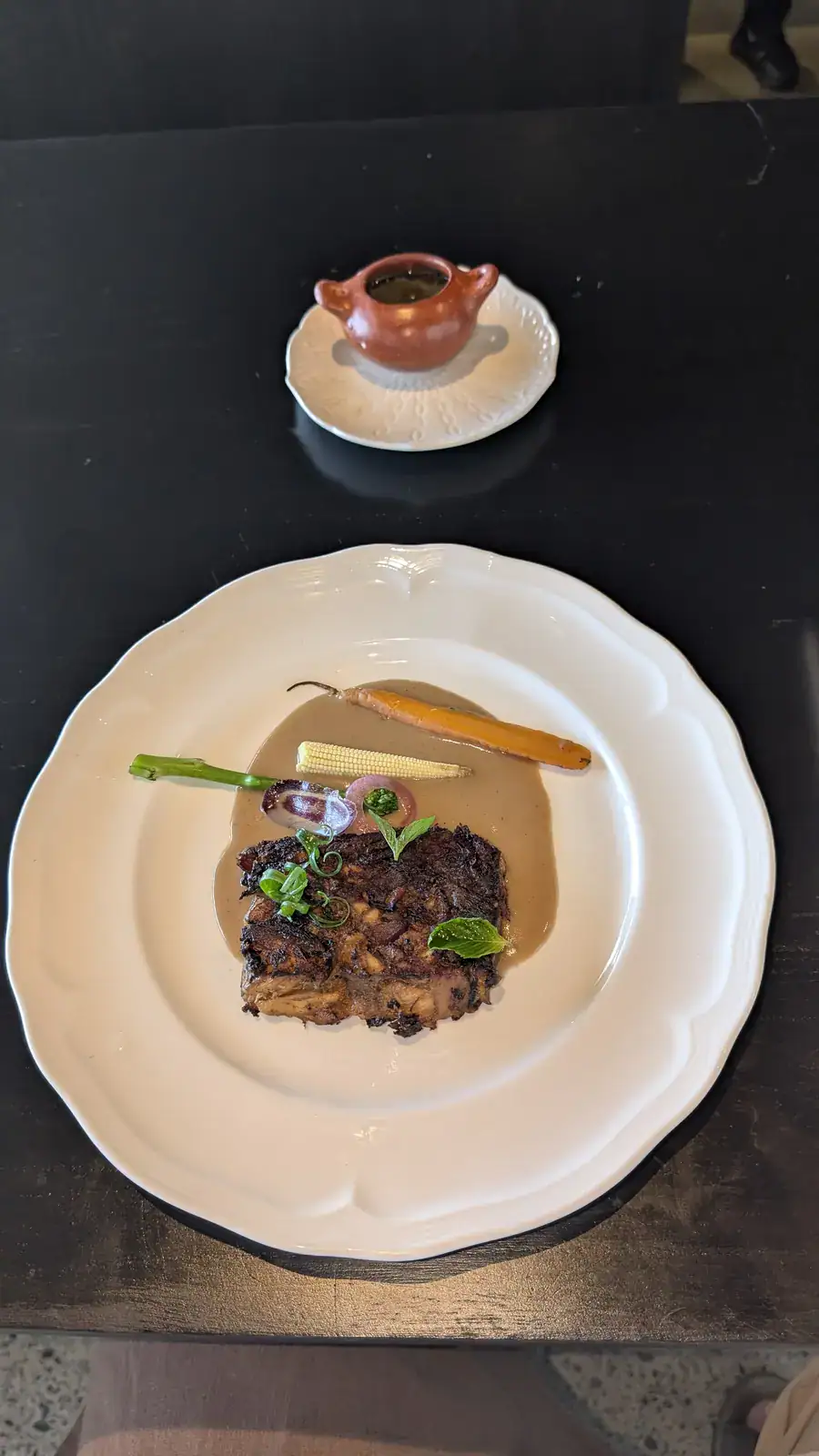
Gallina India is the native free-range hen at the center of one of Honduras’ most meaningful food traditions. Unlike commercial poultry, these birds are raised in natural environments on natural diets, and the resulting meat is richer in flavor and firmer in texture in ways that are immediately apparent. For generations, sopa de gallina india has been the dish Honduran families made for gatherings, celebrations, and the occasions worth marking. It’s deeply embedded in rural life, the kind of cooking that carries memory in every spoonful.
Spirit Origin has taken that tradition, the hen terrine, the demi-glace, the crispy skin, and reimagined it as a fine dining course without erasing what it is.
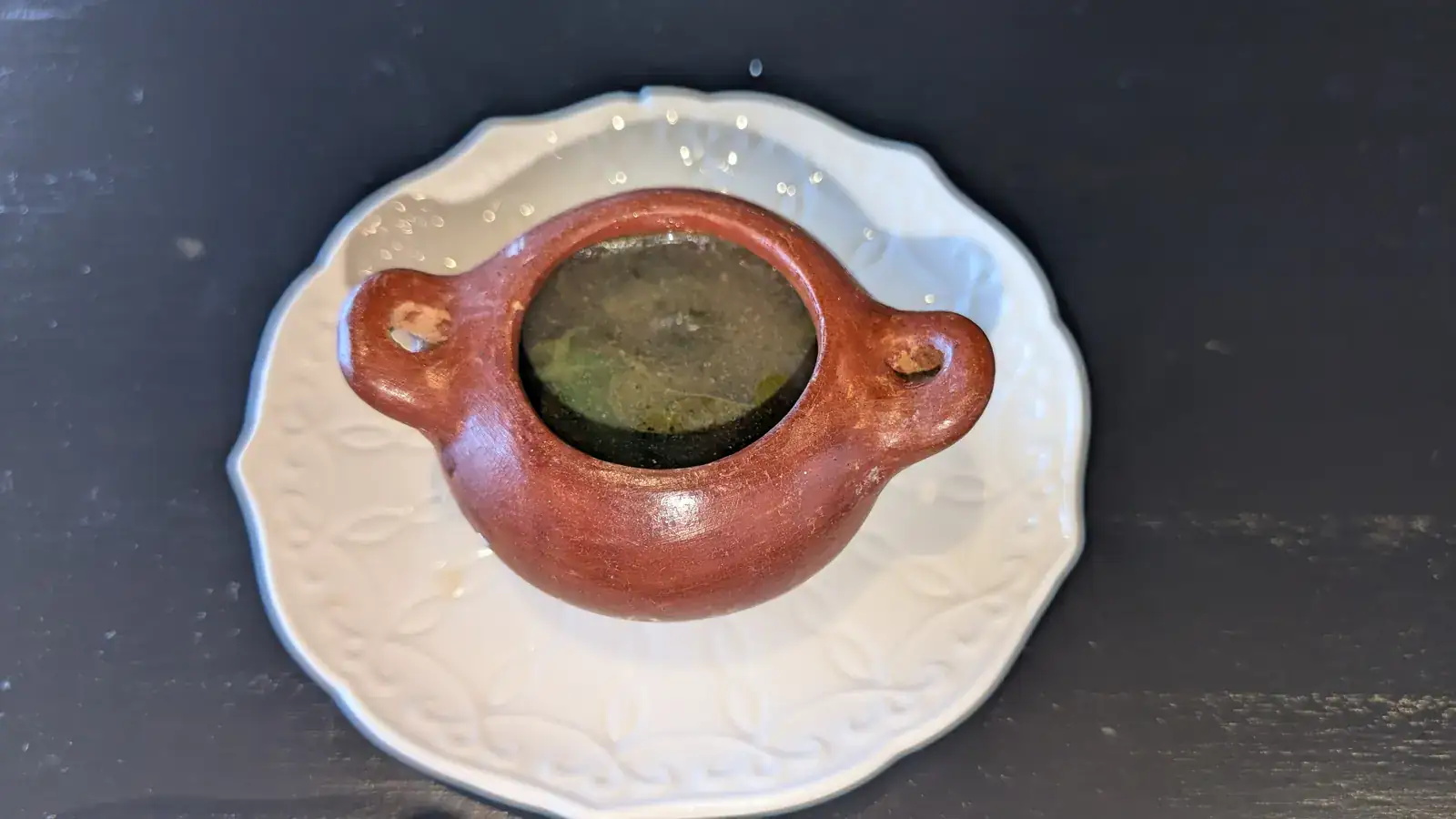
The Creole consommé served alongside tasted like it had been simmering on someone’s grandmother’s stove since morning: deep, layered, unhurried. The micro-greens on top of the chicken are the only concession to contemporary plating. Everything else honors the source material. It’s the standout food moment of the experience, earning that position by being both technically accomplished and deeply honest.
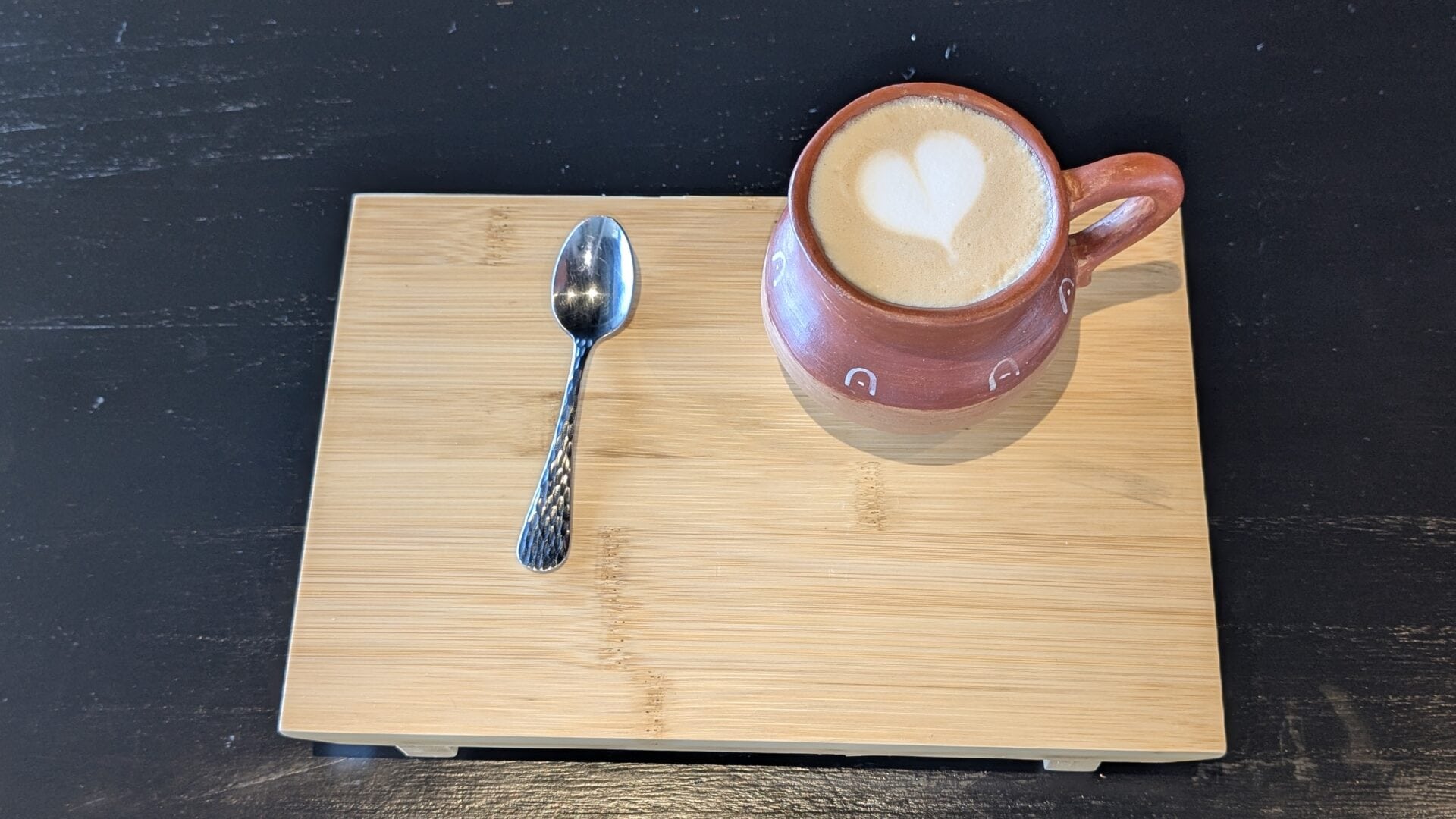
My first cappuccino, for the record. The Cappuccino Course is an 89-point Bourbon from Marcala, served in a terracotta clay mug with heart latte art. The milk is bourbon-infused, subtle enough that you might not place it immediately, but once you do, it adds a quiet warmth that rounds out the coffee without competing with it. Coming immediately after the Hero Coffee, the comparison is baked into the experience and it’s an instructive one. Where the Hero Coffee was clean and direct, nothing between you and the bean, the cappuccino wraps the coffee in a layer of foamed milk that mellows the edges without overpowering. The balance is well-judged. The clay mug is a deliberate callback to Honduran craft tradition and, paired with the score on this coffee, it works.
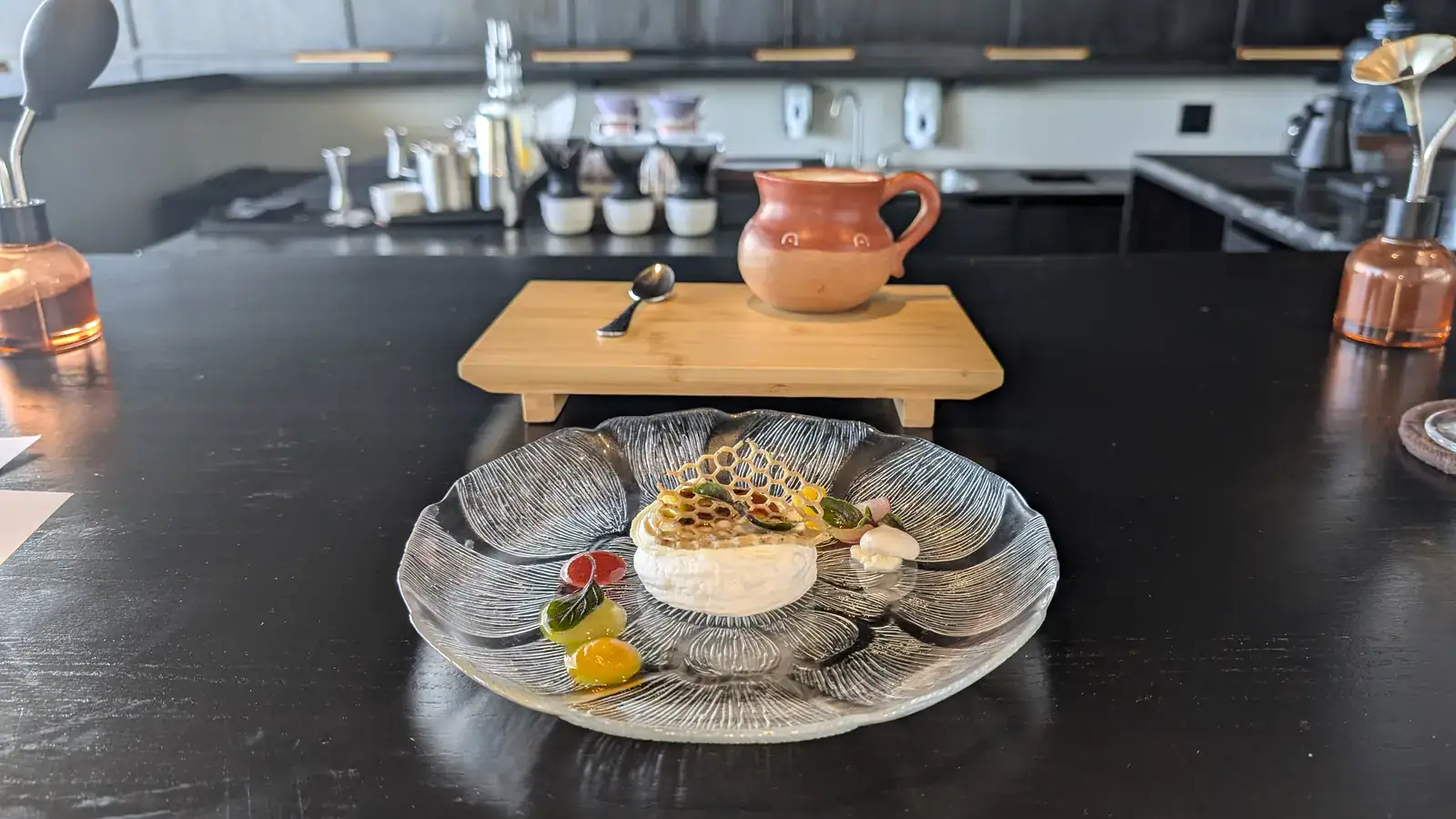
The Citrus Pavlova closes the experience, arriving as a piece of art before it arrives as dessert. Meringue dome, honeycomb tuile crown, coffee cream, orange peel, local berries, set on a glass flower plate. It’s genuinely too pretty to start eating without a moment’s hesitation. Skews sweet, but that’s the meringue talking, and paired with the cappuccino it finds its balance. The right move is to alternate: a bite of pavlova, a sip of cappuccino, repeat. The bitterness of the coffee cuts the sugar each time, and the sweetness softens the coffee in return. These two were designed for each other.
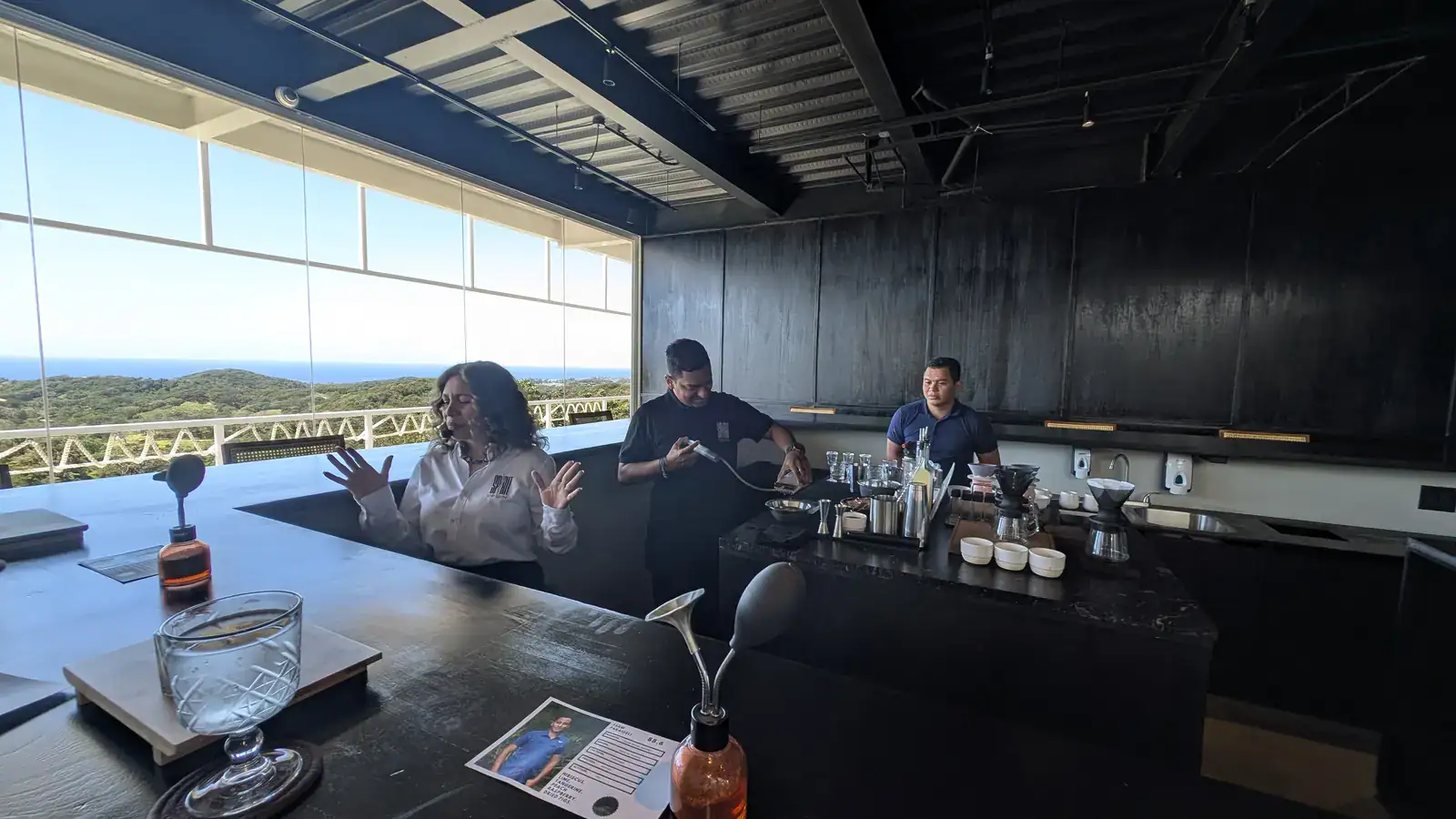
What makes an experience like this land isn’t just the sourcing or the technique. It’s the people in the room. Kathya has built a staff that reflects her own standards. You feel it in the timing between pairings, in the way every plate arrives without disruption, in the fact that 21 guests move through four paired tastings in under 90 minutes without it ever feeling rushed or mechanical.
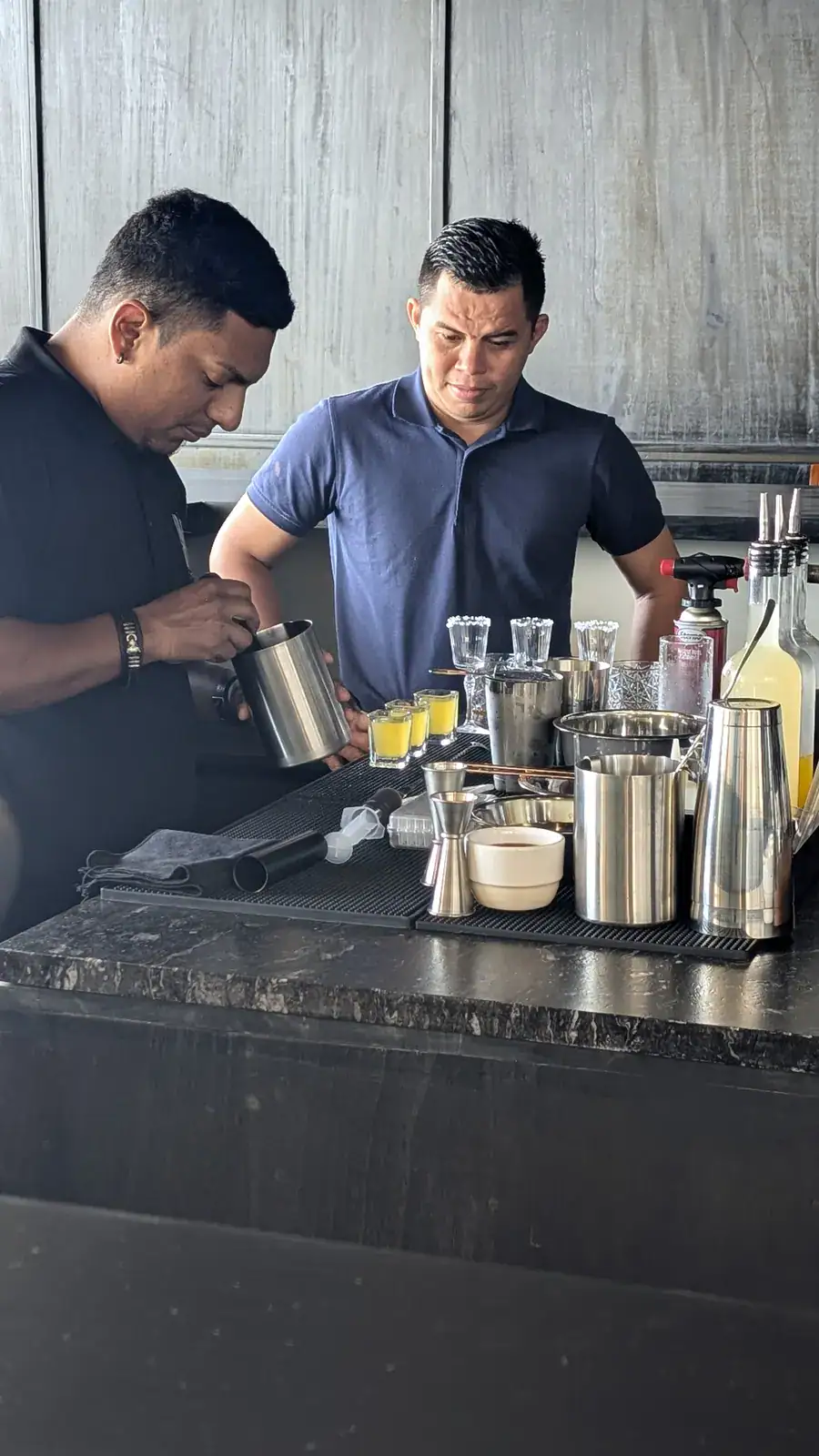
The baristas here are practicing a craft. The spherification in that Hakyuo Namace, the patience behind the slow-drip Hero Coffee, the structural precision in that Pavlova. None of it happens by accident. Kathya’s passion for the coffee and for the farmers who grow it doesn’t stop at the end of her microphone. It runs through the entire room.
The Coffee Omakase is $99 per guest. I’ll be upfront. I had the same reaction most people have when they first hear that number. A friend of mine who thinks nothing of a $120 dinner and a good bottle of wine looked at me like I’d lost my mind. I get it.
Here’s the reframe: a nice dinner for two on this island runs $80–$120 before drinks. For $99, you get four paired tastings, up to 90 minutes with one of the most knowledgeable coffee hosts in Central America, a product that has won international recognition at the highest level of specialty coffee evaluation, and a story about Honduras and the farmers who grow your coffee that you’ll still be thinking about when you get home. It’s not just a meal. It’s an education wrapped in an experience.
If you’ve done a serious wine tasting at a vineyard, a chef’s tasting menu at a fine dining restaurant, or paid for a craft cocktail experience, you understand the category. This is that, built around Honduran coffee.
Is it a splurge? Yes. But aren’t you worth it?
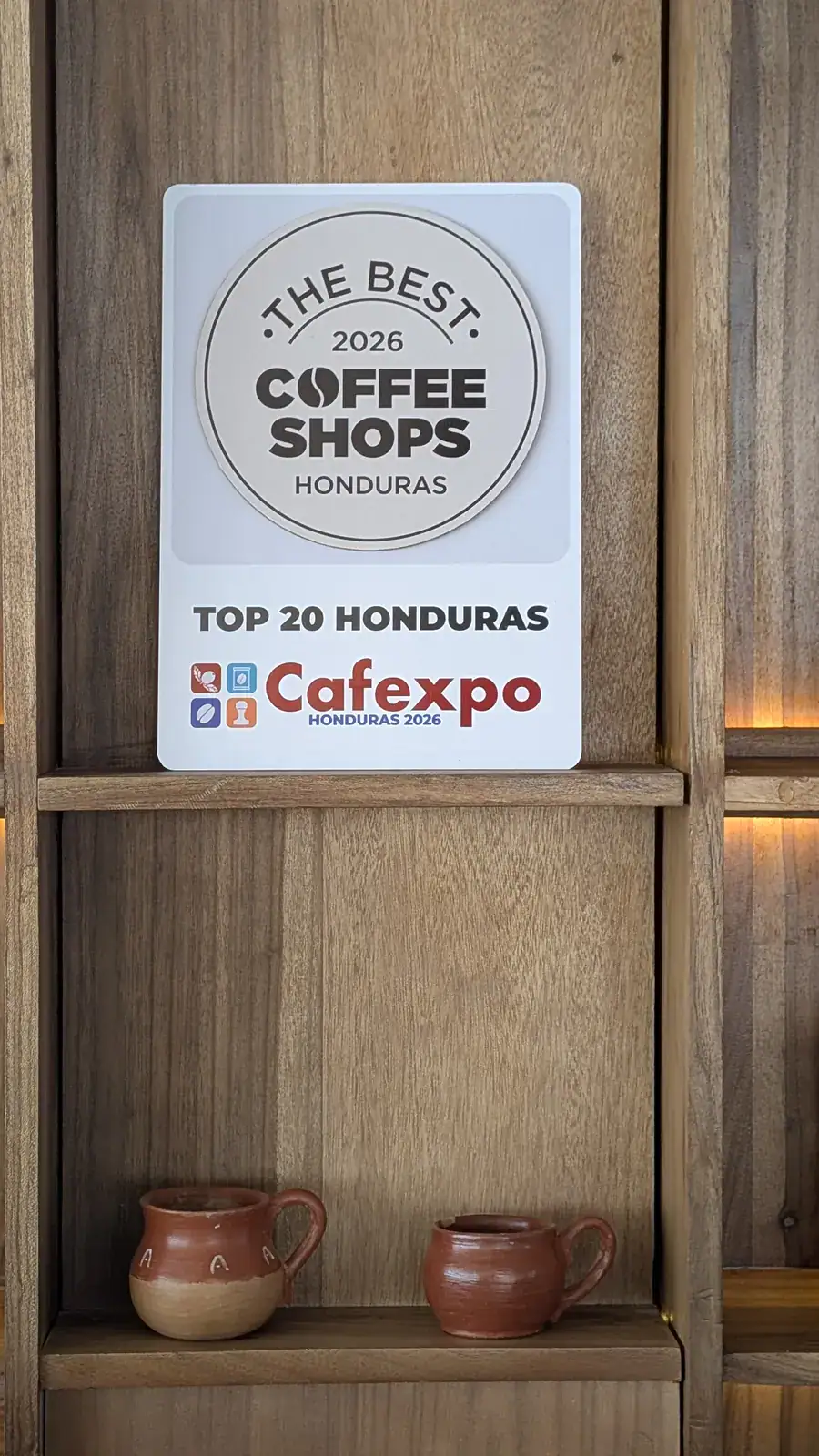
If you fall for the coffee, and there’s a good chance you will, Spirit Origin’s retail lineup is available in the coffee shop and ships worldwide free on orders over $55.
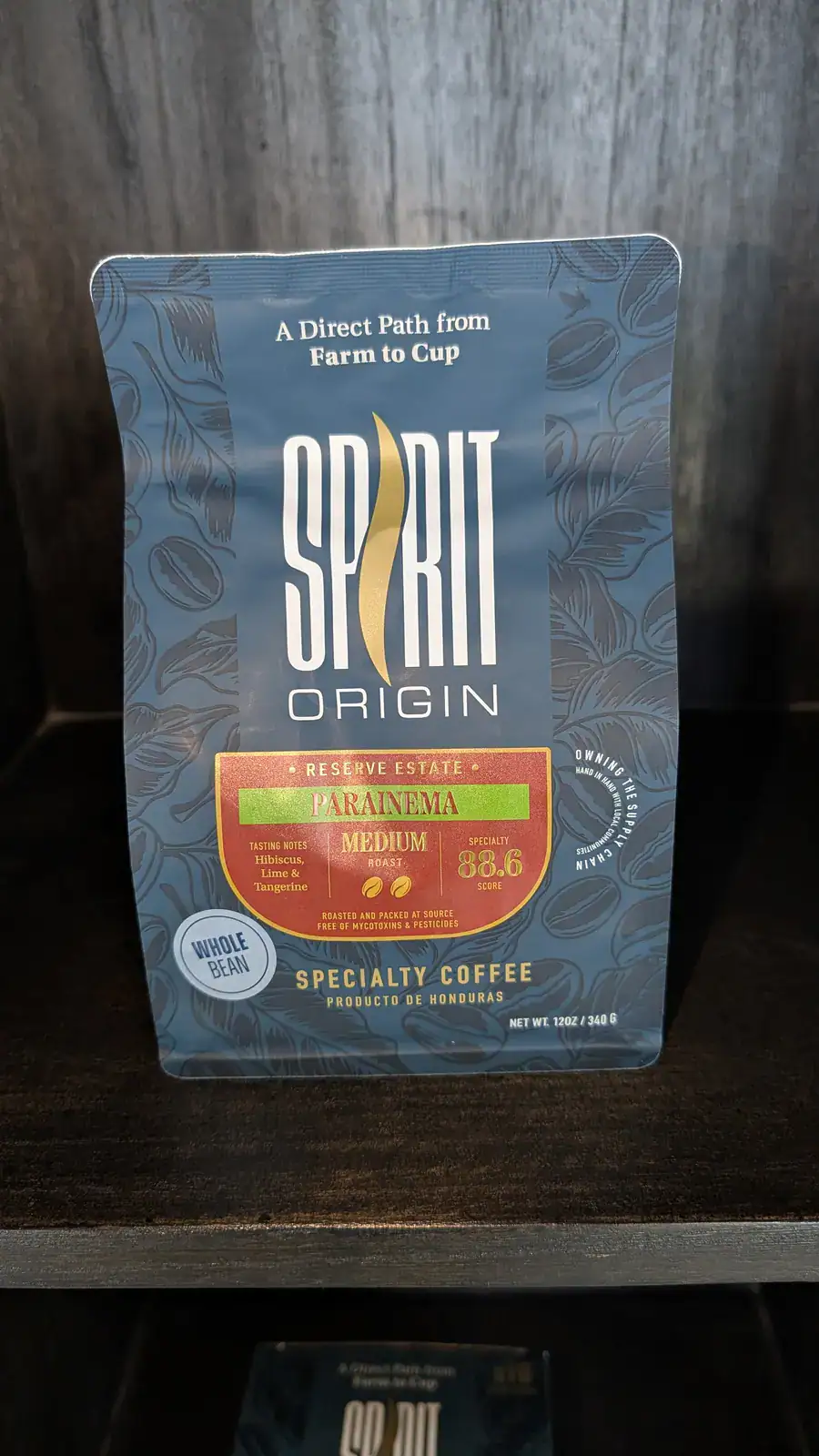
The five reserve varieties on the shelf during my visit: the Parainema (the hero coffee from the Omakase), the Bourbon from Marcala, the limited Geisha (only 498 bags), the Catuai, and the Espresso Blend. If you want to start with what you already know you like, the Parainema is the obvious choice.
View Spirit Origin Coffee on RoatanYP
Explore more restaurants and bars in First Bight
Jason Janes