
-
Cart
No items added to cart
Subtotal {{ currencyFormat( getSubtotal() ) }}Continue -
Sign In/Register
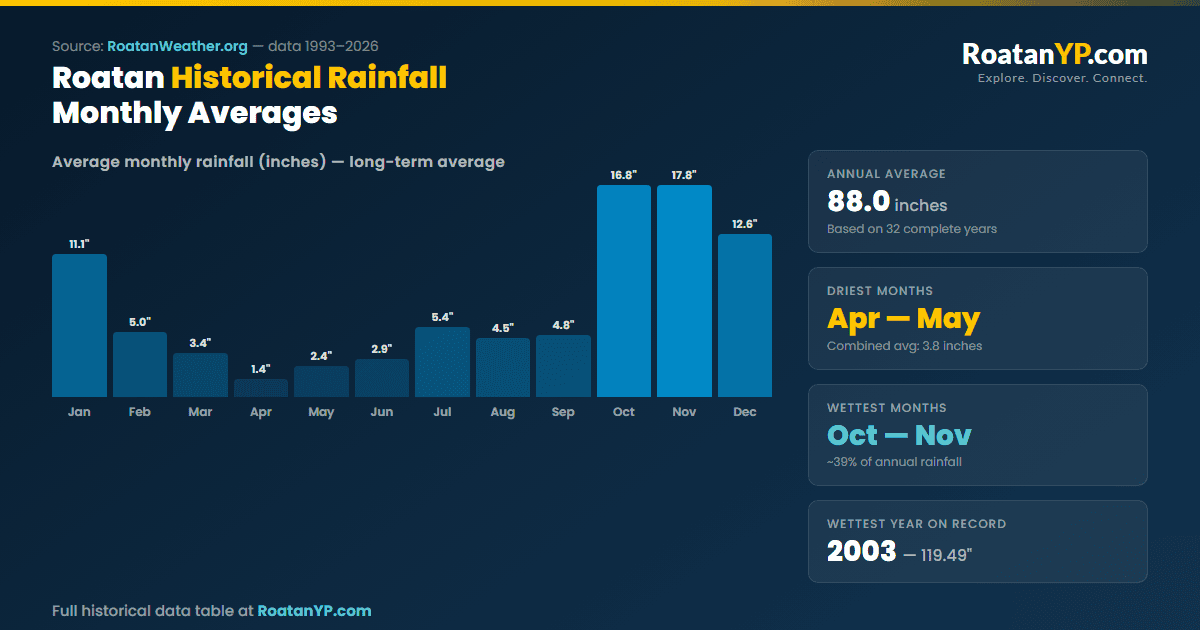
Roatan’s rainy season runs October through mid-December, and October and November are the wettest months, averaging 34.6 inches of rain between them. April through June are the driest and hottest. The island stays warm year-round (75–90°F), and you can visit any month: even in the wet season, most days still give you plenty of dry time on the water.
Don’t believe mainstream weather apps. They’re wildly inaccurate for Roatan. They’ll show rain all day when it’s actually sunny with a 20-minute afternoon shower. For real conditions, check the forecast from local experts at roatanweather.org and use Windfinder or Windy. Both are far more reliable for island weather.
Windy
Live wind, rain & wave forecasts
Windfinder
Wind & weather for sailors & divers
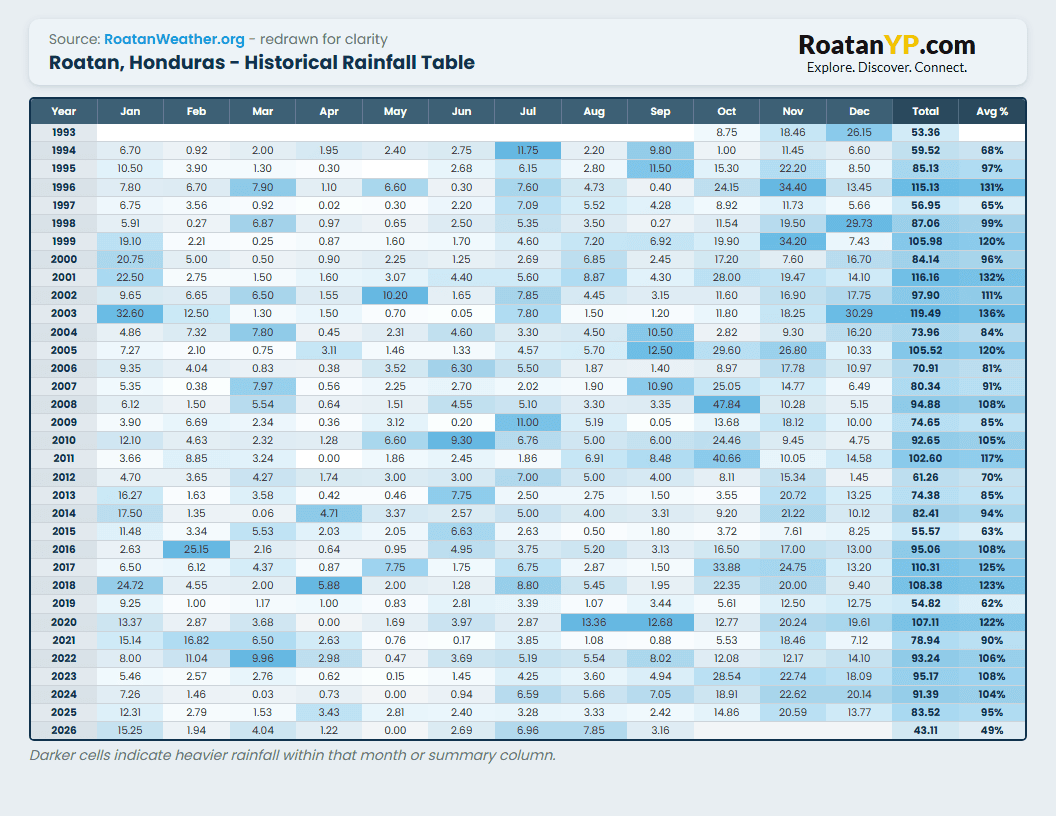
Everything below is based on actual rainfall data from 1993 through September 2026, collected on-island by RoatanWeather.org.
Roatan averages about 88 inches of rain per year, but that number means less than you think. Nearly 40% of that total falls in just two months (October and November). The other 10 months split the remaining 60% between them, and six of those months average less than 5 inches each.
Most of the year is drier than you’d expect for a Caribbean island.
One novelty worth knowing: the all-time record low temperature on Roatan is 65°F (18°C). This is a tropical island. When locals reach for a long-sleeve shirt, visitors from colder climates are usually still in shorts.
January is Roatan’s wildcard month. It averages 11.1 inches, making it the third-wettest month on paper, but that average is skewed by a handful of extreme years. Some Januarys are bone dry and beautiful. Others (like 2003 at 32.6 inches) dump more rain than most months see all year. January weather often arrives in the form of “northers,” cold fronts pushing down from the US that bring gray skies, cooler temperatures, and steady rain for 2 to 3 days at a time before clearing. It’s genuinely hit-or-miss from year to year.
February is when things start to turn reliably. The drying trend begins here and continues through spring. February averages 5.0 inches, March just 3.4 inches. By late February the trade winds are steady, the humidity drops, and Roatan starts feeling like the postcard. These are excellent months to visit: warm, breezy, low humidity, and relatively uncrowded outside of the Semana Santa week.
What to expect: January is a coin flip. Pack a light rain jacket and don’t build a rigid itinerary around sunshine. February and March are progressively more reliable, with warm days, cooling trade winds, and short showers that clear fast.
April is the driest month of the year, averaging just 1.4 inches. The island is often weeks without measurable rain. April 2026 totaled just 1.22 inches and May 2026 recorded none. This is prime conditions for diving and snorkeling: calm seas, maximum visibility, water temperatures around 82 to 84°F.
A note on timing: April is still a relatively busy month. Semana Santa (Holy Week) is typically the single busiest week of the year on Roatan, and the date shifts annually with the Easter calendar. Crowds and prices taper off about two weeks after Semana Santa, making mid-April onward the real start of shoulder season. By May 1 the island quiets noticeably.
June starts to warm up and humidity creeps back in, but rainfall stays modest at about 2.9 inches on average.
What to expect: Hot, sunny, and dry. The calmest ocean conditions of the year. Bring sunscreen, stay hydrated, and enjoy the reef at its clearest.
Pro Tip: May onward into June is the sweet spot for value travelers. You get near-dry-season weather, far fewer crowds than April, and hotel rates that are noticeably lower than the holiday high season. It’s the best weather at the best prices.
Summer brings a noticeable uptick in rain and humidity, but it’s still manageable. July averages 5.4 inches, August 4.5 inches, September 4.8 inches. Showers tend to be afternoon pop-ups: 20 to 40 minutes of heavy rain followed by clearing skies. Mornings are usually sunny.
This is technically hurricane season (June 1 through November 30), but Roatan sits at the southern edge of the hurricane belt and direct hits are rare. The last major hurricane to affect Roatan was Eta in November 2020. That said, tropical systems in the western Caribbean can bring extended periods of rain and rough seas even when the storm track stays well away.
What to expect: Warm and humid with afternoon showers. Mornings are your best window for beach time and water activities. Pack a waterproof phone pouch and a quick-dry towel.
This is rainy season, and it’s not subtle. The heaviest stretch runs roughly from mid-October through mid-December. October and November together average 34.6 inches, about 39% of the entire year’s rainfall in two months. October averages 16.8 inches and November averages 17.8 inches. Some years are extreme: October 2008 dumped 47.8 inches in a single month.
The rain during this period is genuinely different from the brief pop-up showers of summer. Multi-day stretches of steady overcast rain are common, particularly when tropical systems are active in the Caribbean. Roads flood temporarily. Power outages happen. Dive visibility drops.
By mid-December things begin to shift. The Christmas period on Roatan is typically characterized by intermittent showers rather than sustained rain, and it’s actually a wonderful time to be on the island. The holiday atmosphere in West Bay and West End picks up, the weather is noticeably more cooperative than the previous two months, and the island has energy again.
What to expect: Mid-October through mid-December is the stretch most likely to affect your plans. If you have flexibility, work around it. If you don’t, manage expectations and pack accordingly. Christmas week and beyond are a reasonable choice with weather trending in the right direction.
Pro Tip: If you visit in October or November, don’t write off the trip. You’ll still get windows of sunshine between rain events, dive shops still run trips when conditions allow, and hotel rates are at their lowest point of the year. Come mentally prepared for rain days and have a plan for them: a spa day, a cooking class, or an afternoon exploring Coxen Hole.
| Month | Avg Rainfall | What to Expect |
|---|---|---|
| January | 11.1″ | Hit or miss year to year. Northers bring multi-day rain spells; other years are sunny and dry. |
| February | 5.0″ | Drying trend begins. Trade winds pick up, humidity drops, temperatures comfortable. |
| March | 3.4″ | Warm and increasingly dry. Excellent beach and diving conditions. |
| April | 1.4″ | Driest month. Hot, sunny, calm seas, peak diving visibility. Busy around Semana Santa. |
| May | 2.4″ | Still dry and hot. Shoulder season pricing, noticeably fewer crowds than April. |
| June | 2.9″ | Humidity returning but rain still light. Warm water temperatures. |
| July | 5.4″ | Afternoon showers begin. Mornings usually clear and sunny. |
| August | 4.5″ | Similar to July: warm, humid, pop-up showers. |
| September | 4.8″ | Hurricane season watch, scattered showers, still plenty of sunshine. |
| October | 16.8″ | Rainy season peaks. Extended rain events, reduced dive visibility. |
| November | 17.8″ | Wettest month on average. Lowest tourism, best hotel deals. |
| December | 12.6″ | Heavy rain through mid-month, then improving. Christmas week is a good time to visit. |
There’s no wrong time to visit Roatan, but some months fit certain travelers better than others.
Best for weather: April through June. Driest conditions, calm seas, best diving visibility. Note that April (especially Semana Santa) is still busy and priced accordingly.
Best for value: October through mid-December. Lowest hotel rates, fewest crowds. You’ll deal with more rain but save significantly. Mid-December onward the weather starts improving.
Best balance of weather and crowds: Late April through May, and February through March outside of Semana Santa week. Prices start normalizing about two weeks after Easter, making the back half of April a solid option if the holiday rush doesn’t appeal to you.
Holiday travel: Mid-December through early January is peak season. The Christmas period has good weather relative to the months before it, and the island has a great energy. Expect higher prices and book accommodations well in advance.
Pro Tip: Don’t plan your trip around weather apps. Seriously. Use Windfinder or Windy for real-time conditions, and check the historical data below to set realistic expectations for whatever month you’re considering.
For the full year-by-year breakdown, see the complete historical rainfall table below.
Jason Janes
RoatanYP.com
Have a question about Roatan weather? Drop it in the Roatan Travel Tips & Info Facebook Group (48,500+ members) and the community will help you out.